

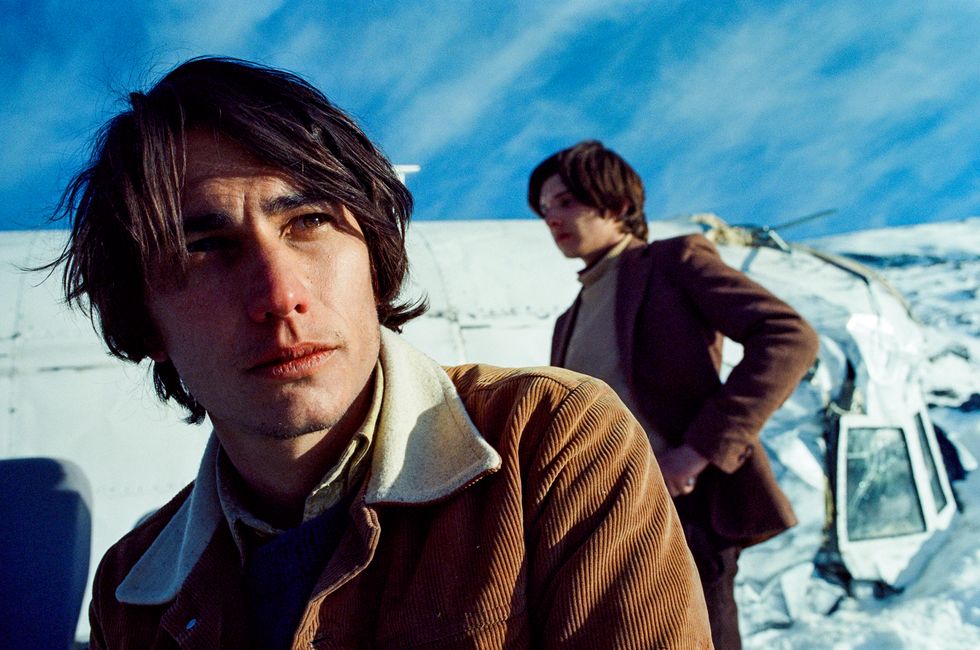
The film LA SOCIEDAD DE LA NIEVE – SOCIETY OF THE SNOW – directed by Spanish filmmaker JUAN ANTONIO BAYONA tells the story of the Uruguayan rugby team’s survival following a plane crash in the Andean mountains in 1972 and the traumatic experience of having to resort to eat the flesh of their dead companions. The film is based on the direct testimonies of the survivors – 16 survivors out of 45 passengers- as well as on the author Pablo Vierci’s account of the events who says of Bayona’s film: More than a film it is an experience. Indeed this is a very intense film mixing emotion and bravura moments. Salvation will come after 72 days in sub-zero temperatures in the everlasting snow with constant efforts to resist despair and death.
The film which is Spain’s official submission for Best International Feature at the 96th Academy Awards on 10 March 2024 is available to watch on Netflix.

Text and portraits by Beatrice Colbrant
B.C: Society of the Snow is a very impressive movie: a tragic story, a fabulous cast, an extraordinary technical crew, dramatic locations, and your excellent directing, what do you keep of this experience, what have you learnt?
J.A. Bayona: Every film is a learning experience. The film took me out of my comfort zone, being in such a sort of dramatic chaos revealed all the energy I possess whilst offering me a great sense of freedom. It was like a pure organic feeling!
B.C: Earlier film versions of this dramatic event have been made. What does your film bring to the story?
J.A. Bayona: The compassion of the author Pablo Vierci who inspired the film and looked at each of the characters, bringing back the memories of the dead. The book was written 36 years after the accident. The message is more powerful. It is like hearing the survivors saying thank you to the dead.
B.C: After The Impossible, the story of the 2004 Indian Ocean tsunami, you now make a film about a terrible and traumatic plane crash. Do you like disaster-drama films?
J.A. Bayona: Let’s say that I am interested in ordinary stories that become extraordinary. Then the main focus of the film becomes the characters and I love it when it is all about characters.
B.C: Some directors like Henri-Georges Clouzot had the reputation of treating their actors quite badly. What sort of a director are you with your actors?
J.A. Bayona: I am always emotional. I encourage the actors to improvise, I give them the information and the tools to understand the story and to be in character and sometimes I play them some music. It is important to give the actors some space and to let them find the right tone and not be afraid. My actors, all from Uruguay and Argentina, come from the theatre. I did not want any star or any well-known face, in that sense they are all at the same level. All my actors got to meet the families of the deceased and the families of the survivors so that they could bond with one another, therefore creating a personal link for each character.
B.C: The real story sees the plane crashing in the Valley of Tears in but you chose to film in the Sierra Nevada in Spain
J.A. Bayona: It would have been too dangerous to take the actors to the Valley of Tears located in a remote part of Argentina, the real place of the crash, but I found that the Sierra Nevada in Spain was a safer and similar place to take the team, with its high mountains and the snow. It also created the sense of isolation needed as the actors were isolated from their respective families in Uruguay or Argentina. However, we did shoot some scenery and landscape images in the Valley of Fears and thanks to some special effects we could use the images as a background when it was needed to increase realism.
B.C: In an earlier film about the plane crash – Supervivientes de los Andes by René Cardona (Mexico, 1976) there is a scene where the survivors insist on making a distinction between cannibalism -which they think implies murder- and anthropophagy -implying simple necessity. You don’t insist on this distinction in the film
J.A. Bayona: In fact I did check the matter carefully to decide whether this should be developed or not. But cannibalism is the right word to use in these circumstances because according to the dictionary whether you call it cannibalism or anthropophagy the notion is the same and only means eating human flesh. Cannibalism never implied having to kill anyone to eat their flesh!
B.C: Seeing the editing of some filmmakers like Hitchcock who only filmed what he wanted to see on the screen, you decided to work with 3 cameras, to film non-stop, and then rely on the editing.
J.A. Bayona: The reason is that due to the subject, I did not feel I could interrupt the actors and the scenes by saying Cut too often. I thought that to respect the intensity and emotion of these dramatic moments and to avoid any unnecessary repeated interruptions on the set it was better to film continuously and I did shoot a considerable number of hours. Then I relied on my two editors – Jaume Marti and Andrés Gil- to select the best images
B.C: You have directed both in Spanish, your mother tongue, and in English. François Truffaut used to say that his only experience of directing in English and not in French, in Fahrenheit 451, had been a true nightmare. Do you find directing in a foreign language more difficult too?
J.A. Bayona: Directing the actors is not more difficult, whatever their nationalities and their language, as they always try to do their best. However, it gets more complicated when you need to discuss with the production companies in a foreign language!

Text and portraits by Beatrice Colbrant
B.C: Which filmmakers do you admire and who have inspired you?
J.A. Bayona: I grew up watching many great classical films on television. I love the films of Kurosawa, and the films of François Truffaut, in particular L’argent de Poche (Pocket Money) L’Enfant Sauvage (The Wild Child), I like Volker Schlöndorff’s Die Blechtrommel (The tin drum), I also like the films or Roger Corman.
B.C: Spain has always been a welcoming place for international filmmakers, offering its splendid locations to the spaghetti westerns of Sergio Leone or the horror films of Mario Bava for example. Spanish cinema itself is quite remarkable, original, and diverse. From the surreal films of Luis Buňuel who still influences many filmmakers, or la Movida with Pedro Almodóvar, or the New Spanish cinema with filmmakers like Victor Erice, Carlos Saura, Bigas Luna, Alejandro Amenabar, including the erotic horror cult films of Jess Franco, as a Spanish director how do you see your place in Spanish cinema? Do you feel you belong to any Spanish school comparable to the French New Wave or the Brazilian Cinema Novo?
J.A. Bayona: In fact I feel like an outsider. I find trying to belong to a school quite weird, it is like looking inside whereas one should be looking outside. However, as an homage to my predecessors, I have started to only use my initials J.A., in the tradition of many Spanish filmmakers of the eighties! As for any possible schools where I could belong, I am left wondering. For example, I am not sure what people call the celebrated Spanish Movida and I have a feeling it may well only concern Pedro Almodóvar. As for the famous Spanish surreal tradition – Buňuel or Arrabal for example – I would say there might well be a touch of surrealism in my film as the story is seen through the eyes of a dead protagonist, Numa Turcatti, played by Enzo Vogrincic, who is not one of the survivors. Numa is visiting God, he gives a sense of the emptiness of life. In that sense, it is not about reality but about the truth. However, rather than Buňuel or Arrabal, I would say I feel closer to the spirit of Roland Topor, the author in particular of The Tenant which was filmed by Roman Polanski.
B.C: As a Spanish filmmaker making films in Spanish do you feel part of European cinema or part of the wider Latin American industry which includes Central American, South American, and Caribbean directors?
J.A. Bayona: Even if I make films in the Spanish language -and in that sense I could also be related to the whole Latin American cinema with the traditional references to magic realism for example – I wish to go beyond all these distinctions and categories. What is important for me is what unites us all as filmmakers which is simply the language of cinema, because cinema is before anything else a visual language.
B.C: Regarding the forthcoming Academy Awards and the Oscars ceremony on 10 March, whilst Anatomie d’une chute (Anatomy of a Fall), a French film in the French language, has been nominated in the Best Film category your film has been nominated in the Best International Feature Film. Any feelings about this?
J.A. Bayona: I find competing in the international category fabulous. I still cannot believe it. It means that I am competing among the best international films in terms of quality. Look at the extraordinary selection! (Editor’s note: Lo Capitano, Matteo Garrone, Italy; Perfect Days, Wim Wenders, Japan; The Teacher’s Lounge, Ilker Çatak, Germany; The Zone of Interest, Jonathan Glazer, United Kingdom and Society of the Snow, Spain, Juan Antonio Bayona)
Society of the Snow is also nominated in the best Hair and Makeup category. I feel so proud of them. Such a dedicated team as they accompanied every actor personally during the filming, studying each of them carefully, having to follow their evolution during the process
B.C: The film can be seen on Netflix.
J.A. Bayona: My collaboration with Netflix has been amazing. Before meeting them I had tried to make my film without success for ten years. The film being in Spanish it was very difficult to find some appropriate funding. The amounts and the finance were limited, they were capped because the film was not in English. Netflix made it possible to make the movie and they financed it with enthusiasm and conviction, they offered me the budget I needed, they did not care about the fact that the film was in Spanish and not in English, they did not care about the language of the film. Netflix also opened a window to the world, the film had millions of viewers in the first 10 days, can you imagine, that it was seen all over the world?
B.C: Any new projects?
J.A. Bayona: A film based on A sangre y fuego from a book by Manuel Chaves Nogales written in 1937 about the Spanish Civil War.
B.C: More projects?
J.A. Bayona: Of course, I am interested in many social issues, women’s rights, LGBT, historical and political figures, etc. People talk a lot about social issues but beyond all this there is cinema.
B.C: Do you mean that cinema must remain entertaining?
J.A. Bayona: Exactly, in that sense that it must never be boring whatever the subject of the film.
B.C: And as a Spaniard born in Barcelona do you plan any film about the Catalan independence movement?
J.A. Bayona: I find the whole thing surreal. It could make a good comedy!
B.C: Any additional message?
J.A Bayona: I LOVE cinema !
B.C: Dear J.A. Bayona, fingers crossed for the Oscars, Hasta la Victoria siempre!
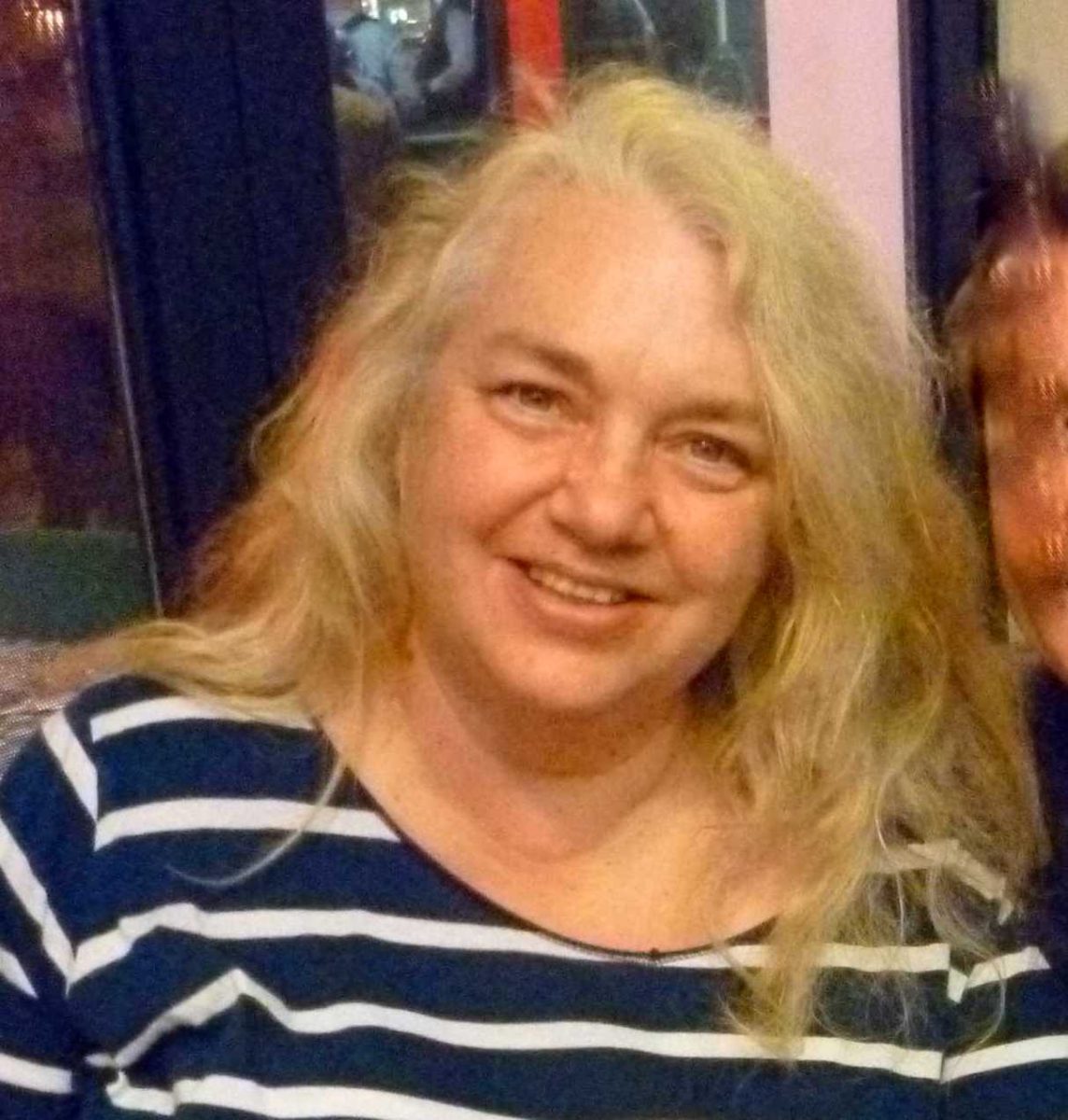
BEATRICE COLBRANT was trained as a lawyer and practiced in Paris as an Avocate (Barrister) and a member of the Paris Bar. She has also been a contributor to the legal press, as well as the television and the French male gay press, in particular TELEMAGAZINE and GAI PIED under the leadership of HUGO MARSAN. She had her own radio program about work and professions on FREQUENCE GAIE in Paris. Having contributed to TÊTU.COM under the ownership of PIERRE BERGÉ, she has requalified in the UK as a lawyer and continues her work as a writer, interviewer and photographer. Portraiture is what she likes most because of the immense diversity of the human face which fascinates her (PHOTOGRAPHY STUDIO BEATRICE COLBRANT). Béatrice has also organized events with the Foreign Press Association in London. Born on June 4, in Le Touquet-Paris-Plage, France, Béatrice is a Gemini. What she hates most : jealousy, snobbishness, intolerance and the absence of generosity.
