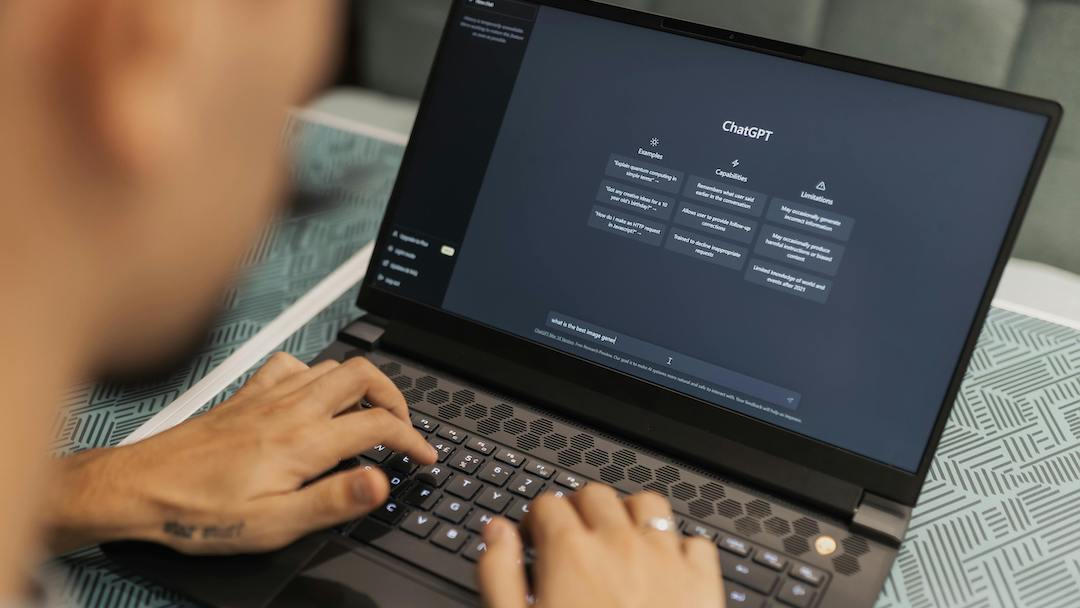

AI in the film industry is a peculiar tool. On one hand, it loosens the studios’ stranglehold on creatives; on the other, it’s a Pandora’s box that could easily corrupt an entire industry.
My name is Taylor Nixon-Smith. I am a twenty-four-year-old producer, stylist, director, and writer (that order in which I get paid). Recently, I received a text stating that Trump plans to provide $500 billion in funding toward the development of AI. This raises a critical question: how do we instill ethics in the use of AI?
As an independent film producer, the idea of having useful and powerful tools that could eliminate weeks of preparation is undeniably appealing. Anything that frees up funds to allocate to camera packages, costumes, set decorations, or other creative placements is fantastic. These tools have the potential to help create something more objectively beautiful or innovative.
However, this ultimately comes down to personal ethics. How people in positions of power wield these tools matters. Treating people like people—not as tools—is crucial. Using AI as a vessel to accomplish tasks more efficiently is, in my opinion, great. But can I trust the next producer to do the same? I can only hope, but I can’t guarantee it, and that lack of certainty frightens me.
As a dyslexic writer, I find AI to be a helpful substitute for an editor.
There was an article came to light recently about how Brady Corbet’s The Brutalist had a small use of AI during a scene where Adrian Brody’s character Laszlo is speaking in Hungarian dialect. In my opinion, that is an acceptable factor, this did not take away anyone’s job and instead of disregarding the practice of the art of motion picture it can tweak and allow more texture to be layered. Now critics are blasting it on the tabloids, this is an ethical practice of AI.
If we look at the music industry, we’ve already seen the rise of deepfakes circulating online, creating commotion and ethical concerns. Now, this is seeping into film. Recently, I saw a clip from Severance where Adam Scott’s character was replaced with Keanu Reeves, and frankly, it’s unsettling. How do we protect the craftsmanship of the arts? Entertainment, once a sacred space, now feels like it’s in a state of purgatory.
Will industry leaders step up and establish ethical boundaries for art, or will they allow it to devolve into mass production? Imagine Marvel movies being created entirely by a computer, overseen by one person at a desk, at a fraction of the cost, leveraging pre-existing IP to print money. This kind of efficiency is tempting, but at what cost? How much is enough?
How do we convince the world, in this fast-paced digital age, that the wisdom of the Stoics—or any ethical framework—might hold the answers to move forward responsibly? Is it up to my generation to ensure things stay on track, or has the generation before us already messed things up beyond repair?
On one hand, I long to see unique, weird films with absurd plots that would never get made by traditional studios but have the production quality of a big-budget movie. Films where cast and crew are paid honourably for their exceptional craft. But on the other hand, will studios opt to replace this craftsmanship with AI doing everything from A to Z?
Unless the TikTok-driven short attention span has destroyed humanity’s ability to form original thoughts and perspectives, I believe the future lies in the hands of the audience. Audiences ultimately decide what succeeds and what fails.

My name is Taylor Nixon-Smith. I am a twenty-four-year-old producer, stylist, director, and writer (that order in which I get paid).

AI’s role in the film industry is both liberating and unsettling—it can empower independent producers and creatives like myself by lowering production costs and streamlining workflows, but without ethical guardrails, it risks devaluing artistry and opening the door to exploitation. As studios and governments, like Trump’s proposed $500 billion AI initiative, push forward with massive investments, the urgency lies in balancing innovation with integrity. Ultimately, AI should serve as a tool that amplifies human creativity rather than replacing it. For those who want to experience films beyond the traditional studio gatekeepers, exploring platforms such as Movie Box Pro, a free streaming app, can offer access to a wide variety of stories outside the mainstream.
Very interesting perspective on how AI is changing the film industry. I agree that these tools can help filmmakers save time and budget while still improving creativity, but the ethical side is just as important. Your point about using AI as assistance rather than replacement really stands out. As a movie fan who follows films and discussions on platforms like moviebox org it’s fascinating to see how technology may shape the future of storytelling while we still try to protect real artistic work.