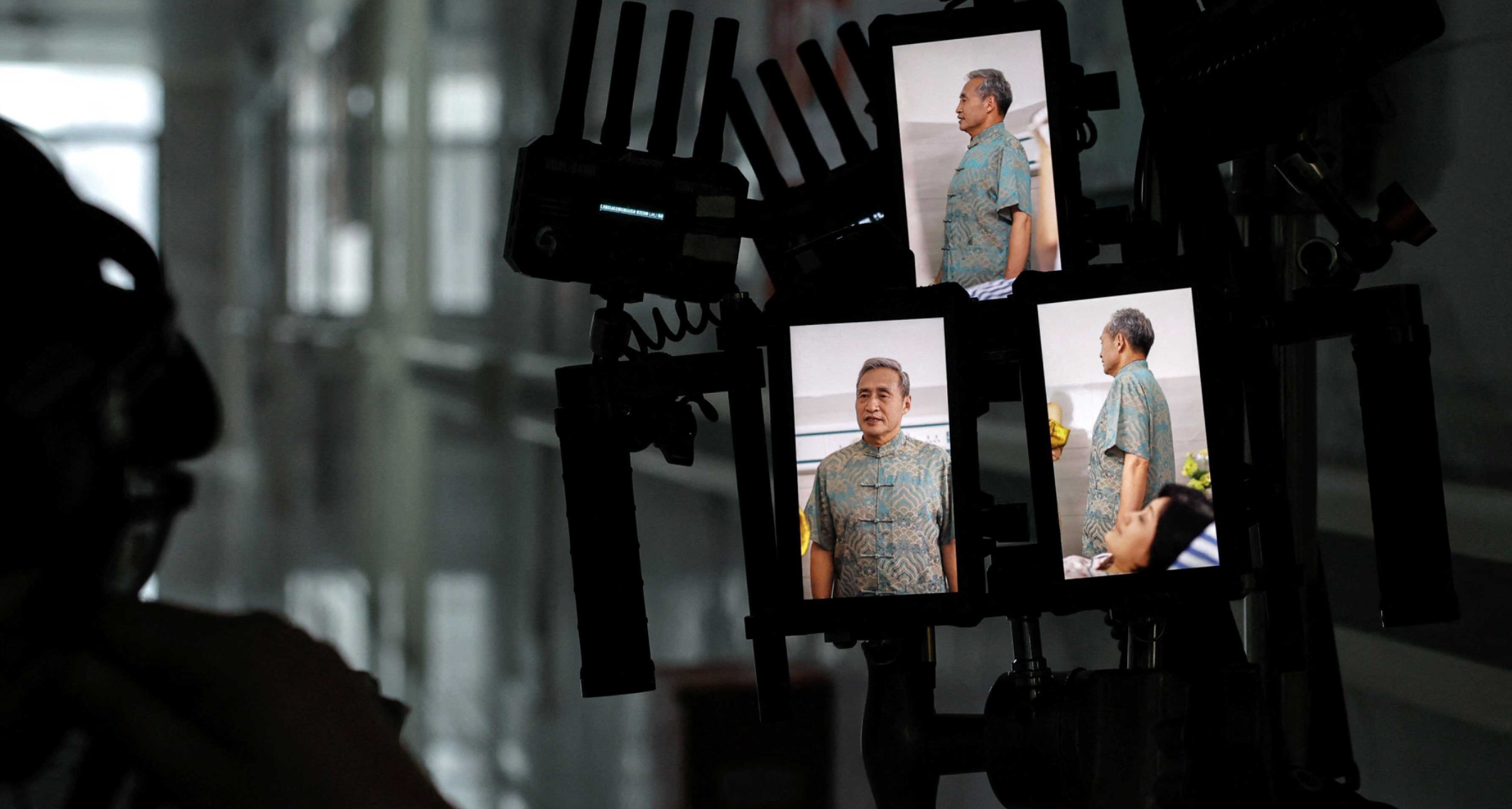

By now, the signal is impossible to ignore. At Berlinale 2026, the European Film Market dedicated an entire Bridging Visions workshop to vertical micro-drama. That’s not a curiosity slot. That’s institutional validation.
Vertical storytelling has officially crossed from “platform experiment” into “global business model.”
But here’s the part nobody on the panels is saying out loud:
The vertical microdrama market is leaving enormous money on the table — and indie filmmakers are uniquely positioned to take it.
Let’s unpack why.
The Numbers Tell a Brutally Clear Story
Outside China, the global microdrama market is projected to grow from roughly $1.4B in 2024 to $9.5B by 2030.
In the U.S. alone: $819M → $3.8B in the same window.
China’s domestic microdrama economy already sits around $7B annually, surpassing its theatrical box office.
This is not “emerging.”
This is already happening.
Vertical storytelling is no longer a TikTok side hustle. It’s becoming a parallel film industry.
And like every parallel industry in history, it’s being shaped by early monopolies.
The Duopoly Problem
Right now, roughly 60% of the overseas vertical microdrama market is controlled by two platforms:
They sit at approximately 30% market share each.
Combined Q1 2025 revenue: around $250M.
Their formula?
Romance. CEO fantasies. Revenge plots. Loop endlessly.
It works. For now.
They’ve been running essentially the same content playbook for almost a decade.
Which is exactly why the opportunity exists.
Because monocultures always create blindspots.
The Audience Nobody Is Building For
Current vertical microdrama audiences skew heavily female — estimates range from 70–85% women aged 30–60.
That drove the romance boom.
But here’s the quiet shift happening underneath:
Male viewership has climbed from about 10% to as high as 30% in some territories.
More importantly:
- Thriller content shows ~40% higher retention among male viewers than romance.
- Horror and suspense genres are growing roughly 2x faster than romantic narratives.
And yet…
These genres remain drastically underrepresented.
Why?
Because everyone keeps repeating the same myth.
The Lie: “Genre Costs Too Much for Vertical”
The standard industry excuse goes like this:
Horror, sci-fi, and thrillers are too expensive for microdramas.
That’s simply not true.
Current U.S. microdrama productions routinely cost $150K–$200K per title.
Why so high?
Because Chinese-backed platforms are outsourcing production to American companies using traditional Hollywood workflows:
- bloated crews
- union-style departments
- inefficient shooting schedules
- cinematic coverage designed for horizontal screens
- post pipelines built for broadcast
In other words: they’re making vertical content like it’s cable TV.
That’s not vertical filmmaking.
That’s legacy production wearing portrait clothes.
Indie Filmmakers Already Solved This
Here’s the uncomfortable truth:
Indie filmmakers have been solving lean genre production for decades.
Micro-budget horror.
Contained thrillers.
Single-location suspense.
Minimalist sci-fi.
This is literally our home turf.
Indie producers understand:
- narrative compression
- psychological tension over spectacle
- performance-driven storytelling
- creative problem solving under constraints
- high-concept, low-cost production design
Vertical doesn’t make genre harder.
It makes it more efficient.
Close framing favors performance.
Portrait orientation heightens claustrophobia.
Short runtimes reward sharp pacing.
Mobile viewing amplifies intimacy and fear.
Horror and thrillers don’t cost more in vertical.
They cost less — if you stop pretending you’re making Netflix.
Vertical Isn’t a Format. It’s a Language.
Most filmmakers still think vertical is simply horizontal turned sideways.
It isn’t.
Vertical changes everything:
1. Blocking Becomes Psychological
You’re no longer staging across width — you’re stacking emotion vertically.
Foreground becomes power.
Background becomes threat.
A face fills the frame.
Negative space above or below becomes tension.
You’re composing anxiety, not coverage.
2. Close-Ups Become Default
Vertical favors proximity.
Wide shots become luxury items.
Intimacy becomes baseline.
This benefits:
- horror
- thrillers
- psychological drama
Genres where faces matter more than vistas.
3. Rhythm Beats Spectacle
Microdramas live or die on retention.
Every 10–30 seconds is a decision point for the viewer.
This forces:
- sharper scene entrances
- faster narrative hooks
- constant micro-cliffhangers
It’s serialized suspense engineering.
Not traditional three-act cinema.
4. Sound Design Carries More Weight
Mobile viewing often happens on earbuds.
Subtle audio cues suddenly matter:
breathing
footsteps
whispers
ambient dread
Sound becomes narrative.
Again: horror filmmakers already know this.
The White Space
So here’s the actual opportunity:
While the dominant platforms stay locked into romance templates and legacy production models, there’s massive unmet demand for:
- male audiences seeking adrenaline over melodrama
- thriller and horror micro-series
- sci-fi horror
- survival narratives
- contained suspense
- genre hybrids
Delivered via:
- lean indie crews
- genre-native storytelling
- vertical-first framing
- fast turnaround pipelines
This is a classic market gap.
Audience exists.
Formats exist.
Money exists.
Creative supply doesn’t.
Yet.
Why This Matters to Independent Filmmakers
Let’s be blunt.
Traditional independent film economics are collapsing.
Festivals don’t guarantee distribution.
Streamers aren’t buying like they used to.
Sales agents are cautious.
Budgets are shrinking.
Risk tolerance is evaporating.
Vertical microdramas represent something radically different:
- short production cycles
- predictable release schedules
- data-driven audience feedback
- lower budgets
- faster monetization
- platform partnerships instead of gatekeepers
This isn’t replacing cinema.
It’s creating a parallel ladder.
One that doesn’t require:
- famous actors
- theatrical windows
- million-dollar P&A
- years of development
It rewards:
- genre clarity
- execution speed
- audience understanding
- operational discipline
Sound familiar?
It should.
It’s indie filmmaking — updated for mobile.
From Feature Thinking to Serial Thinking
The biggest mental shift required is this:
Stop thinking in features.
Start thinking in story engines.
Vertical microdramas succeed when they behave like narrative machines:
- 30–80 short episodes
- each ending on a hook
- characters designed for rapid attachment
- plots built around escalating reveals
This is not “short film logic.”
It’s episodic tension architecture.
Think:
- survival games
- revenge spirals
- haunted investigations
- psychological cat-and-mouse
- sci-fi containment scenarios
Not rom-com arcs.
Production Reality Check
A properly designed vertical genre series can be produced with:
- 5–10 person crews
- minimal locations
- practical effects
- performance-led horror
- contained story worlds
Budgets can drop dramatically when you remove:
- oversized lighting packages
- unnecessary departments
- cinematic coverage redundancy
- theatrical post expectations
You shoot for the phone. You edit for retention. You design for addiction.
That’s the business.
This Is Exactly How Every New Medium Starts
Historically, new formats always begin with:
- Cheap content
- Repetitive genres
- Platform dominance
- Audience fatigue
- Creative disruption
We’re currently between steps 3 and 4.
Romance saturation is already visible.
Viewers are ready for something else.
And the creators best equipped to deliver it are not studios.
They’re indie filmmakers who understand genre, speed, and scarcity.
Vertical Isn’t the Enemy of Cinema
Let me be clear.
This isn’t about abandoning feature films.
It’s about adding another revenue lane.
Another creative playground. Another way to practice storytelling.
Another way to build audiences. Another way to finance bigger projects later.
Vertical microdramas can function as:
- proof-of-concept pipelines
- IP incubators
- audience builders
- cashflow engines
Used strategically, they strengthen independent careers instead of replacing them.
The Real Divide Isn’t Format. It’s Mindset.
Some filmmakers will dismiss vertical as “content.”
They’ll wait for festivals to save them.
They’ll keep chasing shrinking theatrical slots.
Others will treat vertical as what it actually is:
A new narrative economy.
The same split happened with:
- television
- web series
- streaming
- YouTube creators
Every time, early adopters built empires while purists argued aesthetics.
History is repeating.
Final Thought
Berlinale didn’t “discover” vertical microdramas.
It merely acknowledged what the market already proved.
The romance-heavy duopoly won the first phase.
But phase two belongs to creators who understand genre, efficiency, and audience psychology.
Horror.
Thriller.
Sci-fi suspense.
Vertical-first.
Lean production.
Indie DNA.
That’s where the next wave lives.
Not in CEO fantasies.
In fear, tension, survival — and stories that make people forget to scroll.

Photo Credit: Bertie Watson
I founded Raindance Film Festival in 1993 because the British film industry was closed, polite, and congratulating itself while shutting new filmmakers out.
I co-founded the British Independent Film Awards in 1998 because British indie film deserved more than a shrug, a pat on the head, and a Tuesday night screening.
Raindance didn’t start as a brand. It started as a rebellion: film training without gatekeepers, a festival without permission, and a community built by filmmakers who weren’t waiting to be invited in.
Later, we took it global: Toronto, Vancouver, New York, LA, Berlin, and Brussels, because independent film doesn’t belong to one city, one class, or one accent.
I’ve produced 700+ short films and seven features, including Deadly Virtues (2014) and ALICE, which won the SXSW Grand Jury Prize (2019) not because someone “discovered” us, but because the work earned its place.
I’ve written three books used by filmmakers worldwide because too many courses taught compliance instead of survival.
In 2009, I was awarded a PhD for services to film education, ironic, given that most of my career has been about tearing down the rules that education insisted you follow.
I don’t believe in waiting for permission.I believe in making work, building systems, and forcing the industry to catch up.
Specialties: Independent Film (the real kind) · Producing · Writing · Film Education · Festivals · Breaking Broken Systems
Check out my new Substack for in depth Free Articles:
