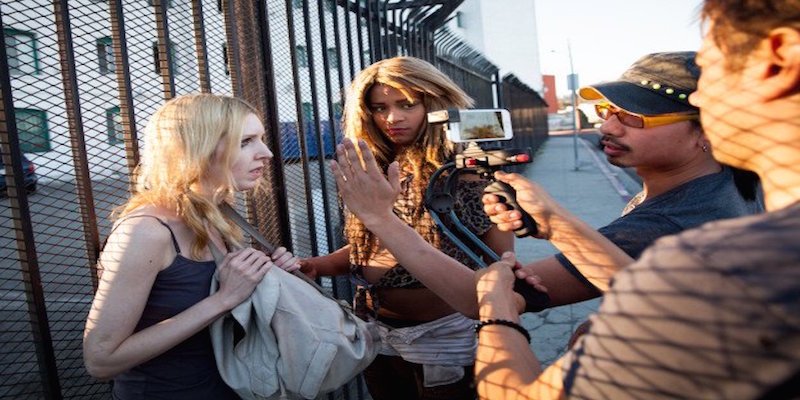

One night when I was about 7 years old, I caught my mum sliding a quarter under my pillow. I had just lost a tooth and having caught my mum red-handed, I had to deal with having the Tooth Fairy myths busted.
Later, when my daughters were born I always tried to create myths for them. They believed in Santa and the Easter bunny until they were early teens – much to the amusement of their school chums.
Myths in childhood are one thing, and perhaps even fine. When it comes to a filmmaking career and the business of surviving as a filmmaker, myths are quite another thing.
Here are the 10 most common filmmaking myths busted:
1. The most talented people are the ones that make it
No they aren’t. The people that make it in movies are the ones that understand the business side. Talented people are regularly elbowed out by their less talented colleagues who simply out-hustle them.
Bust this myth: Get good at self-promotion.
2. Only the best scripts get made
No they don’t. The scripts that get made are the ones that get financed. Often the financiers finance the wrong script!
Bust this myth: Learn how to get a business plan together — a plan that a financier will find irresistible.
3. Filmmaking means you need a lot of money
No you don’t. Many features playing at Raindance Film Festival are made for less than the money needed to buy a London cab.
Bust this myth: Learn how micro budget films are made. You will need to spend some time studying micro budget filmmaking. If you live in the UK you can see some of the festival’s best films on the Raindance VoD channel.
4. You need to go to film school to become a filmmaker
No you don’t! Some of the very best filmmakers never went to film school. What successful filmmakers share in common is they all watch and study movies, and become familiar with filmmaking grammar.
Bust this myth: Film school is a great place to meet fellow filmmakers and form collaborative partnerships. There are many skills they don’t teach at film school. Want to surprise yourself? Look at the list from last year’s Sundance Film Festival’s filmmakers who did NOT go to film school.
5. You need a great agent to get acting work
No you don’t. There’s a common misconception about the role of an agent. They don’t get you work. What they do is negotiate on your behalf. Agents can also advise on career moves.
Bust this myth: The best way to get acting work is to find a screenwriter who can write a great part for you, be it a short, web series or micro budget feature. Then get a director and a producer who know how to make the movie. Once it’s made send it out to film festivals and wait to be discovered by agents looking for hot new talent.
6. Shooting on digital is cheaper than film
No it isn’t (necessarily). Sure, if all you have is a bit of money, digital is cheaper. And for the last 5 years I have been preaching the virtues of shooting digital. Then I made a feature using a RED camera, and last week I found out that if I had taken the RED camera hire (plus the costly and time consuming repair I had to make), added in the cost of the laptop and hard drives on the set I could have probably used Super16mm instead and had a much better looking film.
Bust this myth: Get real here. Have a good hard look at your shooting ratios. If you can shoot 6:1 or less, and if you budget is more than £60,000 ($85,000), I will bet you it will be as cheap, if not cheaper, shooting on film. Call your lab and start getting some quotes. And remember, many of them will do a telecine as well. And create a DCP.
7. Filmmakers can ignore social media
No you can’t! Festival programmers and acquisition executives are very curious about the social media profiles and followers that you have built up. Oren Pelli may have sold his movie Paranormal Activity to Paramount, but what they really bought was his social media strategy, which was brilliant.
Bust this myth: Look, I’m not talking to dinosaurs here – I am talking to communicators using a visual medium. In other words, filmmakers — no matter how shy, you are born social media communicators. Follow some interesting profiles on the web. Watch. Listen. Learn. Build up a circle of followers eager to admire your work.
8. Film school is expensive
No it isn’t. There is so much you can learn yourself by working with a couple of friends, making movies and learning through trial and error.
Bust this myth: If you are really determined to take your film learning into your own hands and, ‘learn-on-the-job’ why not consider the Raindance Postgraduate Independent Film Degree? Or its cousin the HND Level 5 BTEC ion Moving Images. Raindance also has a Summer Film School.
If money is a real concern, there’s always the Saturday Film School!
9. The trick is to get tons of people at your premiere
No it isn’t. If your dream is to be papped by throngs of well-wishers at your first red carpet premiere then you are likely doomed as a filmmaker. The papparazzi can’t help you. The only people that can help you are the people who buy movies, the people who decide what gets on TV and the people who decide which movies get selected and programmed at film festivals. In other words, acquisitions executives, commissioning editors and festival programmers. These few people are the only ones that can help you and they are few in number. They are the ones that you want to see your movie.
Bust this myth: To attract the attention of these three groups of people you will need: a poster; a trailer and a press kit. Make sure you understand how to make these and do it well.
10. You need a sales agent to sell your film
No you don’t. Sales agents represent your film at film markets and approach distributors based on their experience of what a distributor might be interested in. For that they charge you a commission, plus the marketing expenses incurred.
Bust this myth: You can build up a list of distributors and approach them directly. If that fails – wait a minute – let’s put it this way: An alternative strategy would be to self distribute your movie yourself, utilizing the large crowd of followers you amassed when you busted Myth Number 7 (above).
Have I missed any myths? Just stick them into the comments box below.
Did You Know?
- Raindance Film Festival is considered one of the top fifteen film festivals in the world?
- Our Higher Education programme offers HND, BA and MA in Filmmaking and Screenwriting?
- Raindance members support indie film, and enjoy a range of benefits
- Let Raindance guide you on your filmmaking pathway. call +44 (0) 207 930 3412 or email filmschool@raindance.ac.uk

Photo Credit: Bertie Watson
I founded Raindance Film Festival in 1993 because the British film industry was closed, polite, and congratulating itself while shutting new filmmakers out.
I co-founded the British Independent Film Awards in 1998 because British indie film deserved more than a shrug, a pat on the head, and a Tuesday night screening.
Raindance didn’t start as a brand. It started as a rebellion: film training without gatekeepers, a festival without permission, and a community built by filmmakers who weren’t waiting to be invited in.
Later, we took it global: Toronto, Vancouver, New York, LA, Berlin, and Brussels, because independent film doesn’t belong to one city, one class, or one accent.
I’ve produced 700+ short films and seven features, including Deadly Virtues (2014) and ALICE, which won the SXSW Grand Jury Prize (2019) not because someone “discovered” us, but because the work earned its place.
I’ve written three books used by filmmakers worldwide because too many courses taught compliance instead of survival.
In 2009, I was awarded a PhD for services to film education, ironic, given that most of my career has been about tearing down the rules that education insisted you follow.
I don’t believe in waiting for permission.I believe in making work, building systems, and forcing the industry to catch up.
Specialties: Independent Film (the real kind) · Producing · Writing · Film Education · Festivals · Breaking Broken Systems
Check out my new Substack for in depth Free Articles:
