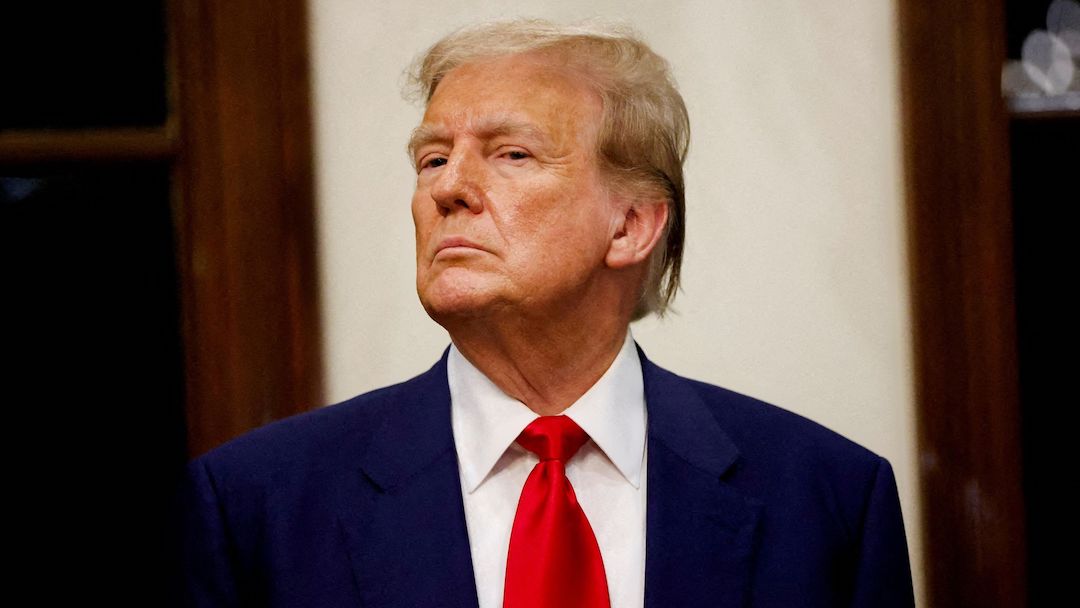

Donald Trump has played trump card after card. His election campaign has been rocked by controversy – filled with shameful and disgusting remarks. As the American presedential election looms ever nearer, there is no denying that Trump has demonstrated an astonishing ability to engage and empower a legion of followers far greater than I suspect he ever imagined.
Trump has risen to dizzying heights. His rise has contradicted everything we have known of populist politics. How could a billionaire, an elitist becomeknown as the working man’s hero?
Many will say that Trumpo is the expert of dirty and underhanded dealings. Perhaps this is true. From where I sit, Trump hasn’t relied solely on manipulation to get where he is. A filmmaker examining his career arc has five core Trumpism to learn from.
Trump Card 1: Use language
Trump uses language that is often crude. Regardless of how you feel about his message filmmakers should study his message: It’s always crystal clear. There is no doubt where he stands or what he is trying to get across. His sentences are short. His words have a strange poetic quality about them. And his Tweets are very re-tweetable.
Filmmakers often ignore the power of language in their press releases, movie titles, loglines and during their press conferences. The keys to developing good language is to emulate trump: His language is filled with confidence and clarity. He is the master at creating a connection with his audience. This is something filmmakers need to do.
A great filmmaker can put themselves in the cinema seats of their audience and know how to keep them glued to their movies. A great filmmaker knows how to pitch their ideas clearly and concisely to potential investors and crew.

Trump Card 2: Use emotion
Trump knows that audiences, be they voters of cinema-goers respond more to emotion than anything else. You can fill the stage or screen with logic. But emotion is always the winner.
Here’s my ‘proof’ that emotion works. How does a man accused of narcissim, mysoginism and racism mangae to win over staggering support? He has figuered out how to engage with his audience. He knows how they are feeling. Because he connects directly with his audience and allows them to engage with his message – his power is magnified and multiplied.
Is there a filmmaker reading this who wouldn’t like to have that happen to their movie? Emotion works.
Trump Card 3: be a master of social media
If you read Trump’s twitter account you will see hundreds and thousands of likes and retweets. If you look at the short viral clips he posts – short videos created at his desk – which get played on social media and even onto news channels. This social media gives him huge coverage that would otherwise cost big, big bucks.
What filmmaker wouldn’t like to have tens of thousands of people visiting their social media channels?
Trump Card 4: You Can’t Please Everyone
Here is the basic Trump message: If you are trying to please everyone, you please no one. He decides on his message and then he sticks to it. He never dilutes the message in order to appease a dissenting voice. And he sticks to his guns. By not watering down his message his followers become more vocal and more loyal and spread his message for him.
Filmmakers, especially in Europe try to please funders from different areas. What results is the typical euro-pudding which may satify local funding criteria but results in a hodge-podge that pleases no one.
Trump Card 5: Publicity Stunts Work
Does anyone know how many times the word ‘Trump’ has appered on a newspaper or TV headline? It must be dozens and doxzens and dozens.
In an increasingly busy world, a great filmmaker knows how to create a moment that cuts through all the noise and grabs their 15 minutes of Warhol.
Fade Out
Donald Trump shows us many more things of what NOT to do than what ‘to-do.’ No matter how disgusting and polarising his words and actions are a good filmmaker should not be dismissed or underestimated.
Have you any other ideas of what we can learn from the Donald? Let me know.

Photo Credit: Bertie Watson
I founded Raindance Film Festival in 1993 because the British film industry was closed, polite, and congratulating itself while shutting new filmmakers out.
I co-founded the British Independent Film Awards in 1998 because British indie film deserved more than a shrug, a pat on the head, and a Tuesday night screening.
Raindance didn’t start as a brand. It started as a rebellion: film training without gatekeepers, a festival without permission, and a community built by filmmakers who weren’t waiting to be invited in.
Later, we took it global: Toronto, Vancouver, New York, LA, Berlin, and Brussels, because independent film doesn’t belong to one city, one class, or one accent.
I’ve produced 700+ short films and seven features, including Deadly Virtues (2014) and ALICE, which won the SXSW Grand Jury Prize (2019) not because someone “discovered” us, but because the work earned its place.
I’ve written three books used by filmmakers worldwide because too many courses taught compliance instead of survival.
In 2009, I was awarded a PhD for services to film education, ironic, given that most of my career has been about tearing down the rules that education insisted you follow.
I don’t believe in waiting for permission.I believe in making work, building systems, and forcing the industry to catch up.
Specialties: Independent Film (the real kind) · Producing · Writing · Film Education · Festivals · Breaking Broken Systems
Check out my new Substack for in depth Free Articles:
