

Everyone loves a good “top 10” list, particularly when it comes to debating the merits of particular films, directors, etc. These things are opportunities for people to learn about new films to watch or defend personal favourites that might not get enough recognition.
Now, to be clear, you can find hundreds of these sorts of lists all over the internet. Trying to rank anything as the “top” or “best” is a pretty subjective conversation, after all.
But whether the list is from the British Film Institute or your coworker Charlie’s movie blog, there’s a good chance you’ll find some crossover. Those aren’t just the box office hits or a specific reviewer’s favourites — those are the ones that are influential in one way or another, inspiring future generations of filmmakers or pushing new methods that changed the industry.
And while it’s easy to think back to the classic Hollywood films that changed the world, it’s equally important to remember that British film has always played a role in the box office. So here is an absolutely-unofficial-but-pretty-conclusive list of the top 10 British films of all time.
#10. Blow-Up (1966)
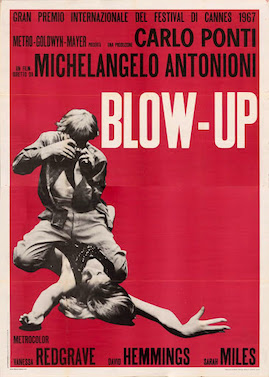
Blow-Up’s exploration of 1960s London broke a lot of standards with its storytelling methods, but its most remarkable characteristic is its focus on sensuality. Michelangelo Antonioni’s depiction of sex scenes ignored the strict Production Code mandates about what was “acceptable” for a film. (MGM actually released the film without Production Code approval.)
The film went on to be a box office success, receiving Oscar nominations and sparking Antonioni’s directorial career. But Blow-Up’s most lasting influence is that it forced the abolishment of the Production Code and led to the establishment of the MPAA system. Antonioni’s unusual masterpiece inspired an entire generation of filmmakers to break tradition and subvert audience expectations.
#9. A Hard Day’s Night (1964)
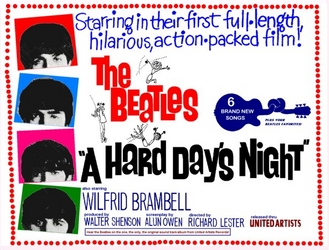
Is it a musical? A documentary? A comedic spoof of both? A Hard Day’s Night continues to be an unusual combination of so many pieces. But coming at the height of The Beatles’ popularity, their humorous biopic harnessed Beatlemania and rode it to commercial and critical success.
In some ways, The Beatles defined pop music. And Richard Lester’s unusual access to capture that in a film became the primary influence for future musicals, British comedies, and even music videos.
#8. The Ladykillers (1955)

Speaking of humour, The Ladykillers is widely considered the best British comedy film of all time, and perhaps one of the best comedy films in general. It’s the height of the dark humour that has come to define English cinema, and this film became an inspiration for many directors.
Alexander Mackendrick brilliantly combined a heist with musical elements and morbid humour, creating a memorable comedy that is still just as funny now as it was in 1955.
#7. Hamlet (1948)
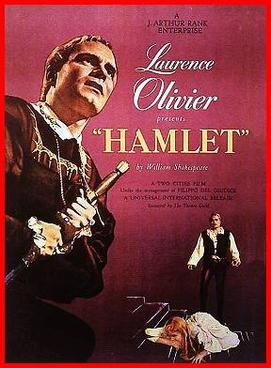
Shakespeare is an indelible piece of Britain’s history, and Laurence Olivier was the master of adapting Shakespearean plays to film. While any list about influential British films would be incomplete without a Shakespeare adaptation, Hamlet is perhaps the most deserving. It was the first British film to win Best Picture at the Academy Awards, and there is no doubt about Olivier’s dedication to the project — he directed, produced, wrote, and starred in the film.
It’s certainly fair to debate whether Hamlet is more deserving than Olivier’s other Shakespearen productions, Henry V and Richard III. But Hamlet’s success — both as a film and as a stage-to-play adaptation — paved the way for those later films, and perhaps Shakespeare adaptations as a whole.
#6. The Bridge on the River Kwai (1957)
While The Bridge on the River Kwai can’t be called the most historically accurate British film, it was one of the first war films that focused on the story of singular, everyday soldiers. It asked thought-provoking questions about the human cost of war — something that would become a major theme in war films for the foreseeable future.
David Lean’s blockbuster film focused on small-scale narrative, which forced viewers into the tragedy of war in uncomfortable ways. As a result, the film won seven Academy Awards and four British Academy Film Awards.
#5. Trainspotting (1996)
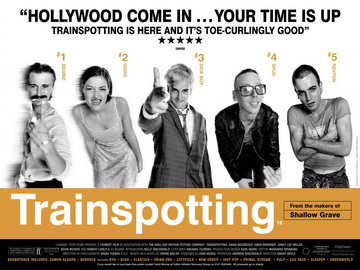
At first look, Trainspotting is a dark comedy that deals with drug addiction. But the reality is that the film takes a hard look at the deeply rooted social inequity for Britain’s working class.
Danny Boyle’s film drove home a compelling problem for British viewers while also succeeding on its artistic merits and storytelling. Being able to pull off both aspects without sacrificing anything made it an obvious and lasting hit that influenced dark comedy films (a staple of British film) for the next three decades.
#4. The 39 Steps (1935)

Alfred Hitchcock is synonymous with suspenseful thrillers. And while Hitchcock might be best known by some of his later films, The 39 Steps is considered the greatest work of his early British years as well as a masterpiece spy film.
The 39 Steps helped establish the “Hitchcock formula” that would define the rest of the director’s career, from self-cameos to cool-but-dangerous blonde women. The film delivers a compelling mystery to unravel, moments of quiet reprieve, and so much tension and atmosphere that it became a defining piece of suspense films.
#3. Lawrence of Arabia (1962)
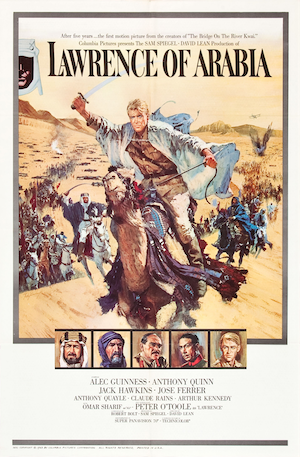
Lawrence of Arabia reintroduced the film industry to historical war epics. Rather than focusing on heroic victories and noble rulers like audiences would expect, the film honed in on the “quieter” parts of the story, building on many of the things people praised from David Lean’s previous blockbuster, The Bridge on the River Kwai (1957).
By showing T.E. Lawrence’s emotional struggles (PTSD, divided loyalties, loneliness, etc.), the film provided a different yet impactful take on historical dramas by removing the fanciful and heroic shades for harsh reality. And that’s just one of the reasons why David’s Lean’s cinematic masterpiece is still considered one of the greatest films of all time.
#2. Dr. No (1962)
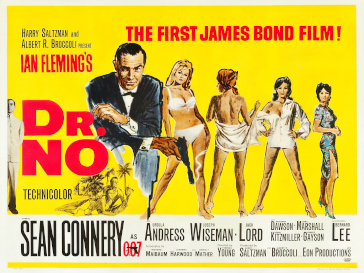
Most critics treated Dr. No like low-brow entertainment, but history has shown just how wrong they were. In addition to introducing James Bond to global and cinematic audiences, Dr. No also launched the entire spy thriller genre that became a global phenomenon.
From Terence Young’s ultra-stylised visuals to high-tech gadgetry to the acclaimed Sir Sean Connery, Dr. No has all the pieces to become a cult hit. It’s still considered “the best” Bond movie by longtime fans, and it continues to inspire films, TV shows, comic books, and novels with that same “suave spy with cool tools” narrative.
#1. The Third Man (1949)
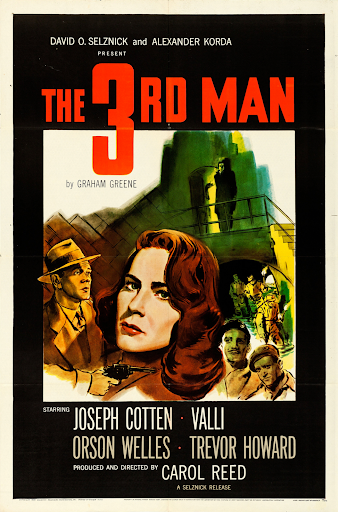
British film includes a lot of heavy-hitters, but none of them defined the industry quite like The Third Man did. Carol Reed’s film took the popular film noir genre and translated it into a European city with all the uncertainty and tension of Vienna in a post-World War II time.
You have a brilliant cast, a gripping soundtrack, and all the tentpole pieces that viewers could hope to find in film noir: German Expressionist influences, dangerous mysteries, gloomy settings, etc. But the film also shows self-awareness, with clear acknowledgement of the “noir” genre as well as the devastating aftermath of World War II.
The Third Man became a main influence for the film noir genre because it took all the pieces viewers knew and pulled them up to a higher level than any other genre film before or since. That sort of success reaches beyond British film — it continues to influence filmmakers generations later, serving as the greatest example of British cinema to date.

Drew Gula is the copywriter at Soundstripe, a company that provides businesses and creators with royalty free lofi hip hop music and resources on how to add music to videos.
