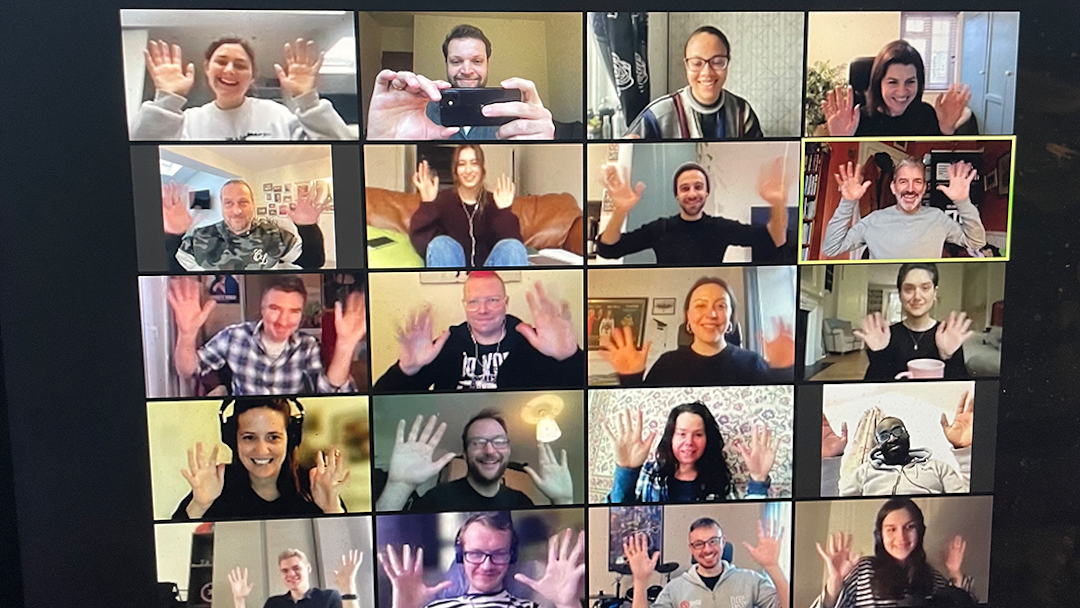

2021 was, for me, The Year of The Webinar. In July, I signed up for yet another: “Pitching for Producers,” run by Film Hub North. I would have been more excited if I’d known that it would lead me to getting my short film, The Innkeeper, into production.
Producer Jackie Sheppard, hosting the session, spoke about The Pitch Film Fund which supports emerging filmmakers by offering £40,000 annually to produce two short film adaptations from the Bible, one drama, one comedy. The fund also supports filmmakers by offering training and workshopping to finalists and shortlisted entrants.
To enter, I had to upload a two-minute pitch video to The Pitch Film Fund website. Though I had a story that I really believed in, I was reluctant. Past entries had been visually stunning – productions in themselves. I wasn’t sure if a simple piece-to-camera – albeit in my lucky jumper – would cut it. At the last minute, I pitched it anyway, such was my faith in the story.
The Innkeeper is a comedy drama about Holly, a spirited seven-year-old who, when cast as the Innkeeper in the nativity play, struggles to refuse Mary and Joseph a room. After the play, we discover that Holly and her mum are actually homeless, and Holly’s compassion for Mary and Joseph’s plight takes on a deeper meaning.
When I was shortlisted, I learnt that The Pitch Film Fund is more than a fund. It is a community. The people involved have your back from the moment you leap the first hurdle. They organised a full day of workshops for shortlisted candidates.
Financier, Jasmin Morrison of Soul Cognition, shared great insights on seeking funding, building convincing pitch desks and writing convincing synopses. My biggest takeaway from the day was a complete and necessary change of mindset.
In pitches, I used to struggle when sharing my achievements. My voice would lower and I would apologetically speed through it. I was so uncomfortable with it that a friend in a pitching group I’m part of suggested bringing a cardboard cutout of myself to pitches and talking in the third person. She was joking. I was tempted.
Jasmin, in her very no-nonsense way, presented the funders’ perspective. They will only invest in people who prove themselves worthy of investment. It is their money. In a pitch, there is no place for modesty. In a pitch, there is a job to do, to persuade a funder or producer you’re up to the job. That is my new perspective. It really helps.
After the day of workshops, we were asked to submit beat sheets and three pages of the script. Let me tell you. There is no better incentive to producing good work than to know that the ten who advance to Finalist will attend a residential weekend in the Lake District to workshop their projects.
At the Low Wood Bay Hotel in Windermere, we had to pitch our films in two minutes then answer questions. Those questions were not for the faint-hearted. But they were real and insightful and made us really examine our projects and pitches.
Next day, we had to pitch again, this time for five minutes, having taken the notes onboard. The setting helped, and the food, and the walks and swims and camaraderie. What I appreciated most were the amazing workshops from script consultant, Justine Hart. It was hard to leave.
The Finals Weekend arrived, along with it nerves. On the Saturday, we were to pitch our stories over Zoom to team of impressive judges. Four of us would advance (two from drama, two from comedy). On the Sunday, the final four would pitch again, having taken onboard judges’ notes.
Friday night, I dreamt that my husband had died. I was so shaken that all else faded. Nerves vanished. Until ten minutes before the pitch. Luckily, we had been offered a coaching session with producer and director Anna Cox. She was a balm to the soul.
Things I believe helped my pitch:
- I practiced and practiced. And practiced.
- I kept to the time allotted – the practicing helped.
- I stuck to a simple, clear character arc.
- I painted pictures with words.
- I used slides of beautiful images via a shared PDF presentation.
- I used “side-by-side” viewing so judges could still see me.
- I acted out the story.
- I was funny. I had to be; I was pitching comedy.
- Situational comedy and dialogue helped with humour.
- I gave one character a Cork accent and had fun with it.
The judges were lovely. I listened carefully to their questions and answered what I was asked. If I didn’t understand a question, I asked for clarity. Ultimately, I advanced.
I had less than twenty-four hours to write a whole new pitch and take into account the judges’ notes. I got four hours’ sleep. Just before going on, during the coaching session, I was still frantically reorganising my slides.
Somehow, I did it. Delivered a fresh pitch. There weren’t many questions. There were a few lovely compliments. Then it was over. I went to the beach to recover.
Early afternoon, it was time for the announcement. All I could think was: I want to keep working with this community. I didn’t want it all to be over. The award for drama was announced first. Silva Kuusniemi won with Stump, an environmental story set in the wilds of Finland. And then, Luke Walton from The Pitch Film Fund called out my name!
And so, The Innkeeper, my comedy about homelessness, goes into production with Reel Issues Films. I am so excited for it to go out to the world. I would love it to foster change.
When I look back on The Pitch Film Fund experience, it feels like I ran a marathon. But in doing so, I learned to run better. I got to know the talented filmmakers running beside me and the coaches who were shouting us on all the way. I loved every step of this process. Especially waking at four am with a plot fix. I look forward to the next step of the journey.
The Pitch Film Fund opens for entries in June 2022.

Denise Deegan is an Irish novelist and screenwriter. Winner of The Pitch Film Fund, she has received two Screen Ireland development funds, one for an intergenerational buddy dramedy that appeared in VARIETY, the second for an adaptation of her YA novel, on the Coverfly Red List.
