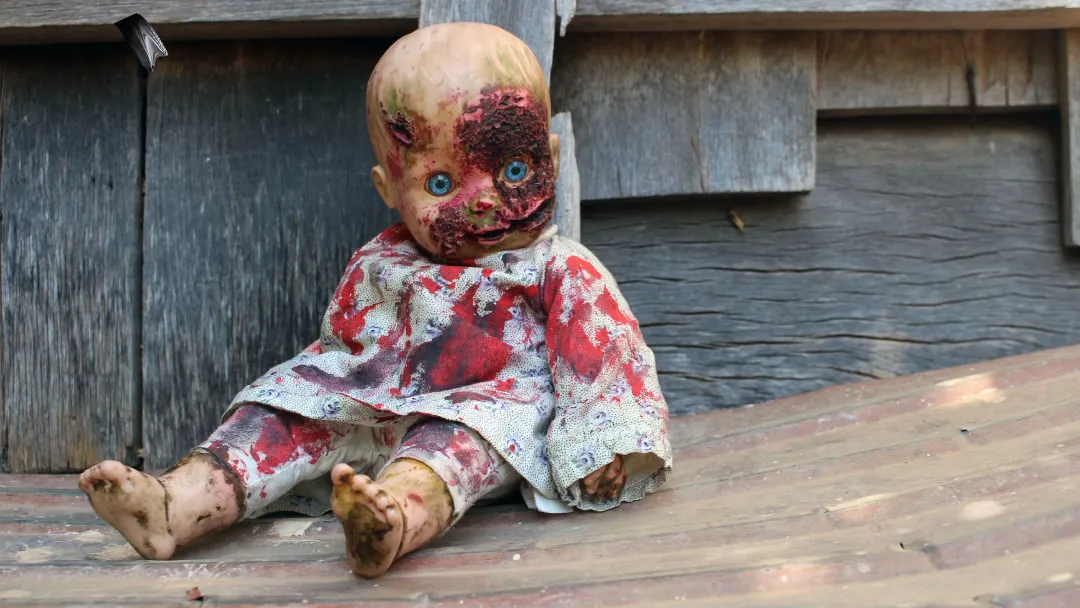

When you strip filmmaking down to its bare essentials — light, sound, and human imagination — one genre keeps coming back from the dead: horror.
No other genre rewards limitation like horror does. You don’t need car chases or VFX. What you need is tension, sound, and the courage to leave some things unseen.
1. Fear Costs Nothing
Fear is the cheapest special effect. The most successful horror films — The Blair Witch Project (1999), Halloween (1978), Paranormal Activity (2007) — were made for next to nothing.
Their trick? Suggest, don’t show.
You don’t have to build monsters when the audience can imagine far worse. Grainy footage, flickering lights, and eerie soundscapes force viewers to fill in the blanks — and that’s where terror lives.
2. Small Spaces, Big Atmosphere
Horror thrives in confined locations: basements, flats, cabins, bunkers.
They’re cheap to shoot, easy to light, and claustrophobic by design.
Repulsion (1965) traps Catherine Deneuve inside a London apartment as her mind collapses. Paranormal Activity unfolds entirely in a suburban house — two actors, one camera, and a global phenomenon.
A single space isn’t a budget constraint. It’s a storytelling weapon.
3. The Real Power Is in Sound
In horror, sound is the monster.
A creaking floorboard, a whisper through a wall, the absence of noise — all can unsettle the audience more than blood or gore.
When Jaws’ mechanical shark failed, Spielberg used sound and suggestion instead. The result became one of cinema’s most terrifying experiences.
For indie filmmakers, a cheap microphone and clever foley work go further than any visual effect.
4. Shadows Are Free
You don’t need expensive lighting rigs. Darkness does most of the work.
The Texas Chain Saw Massacre (1974) relied on handheld cameras and natural light. The Witch (2015) used candlelight to stunning effect. Practical lighting — lamps, phone screens, torches — can transform a low budget into cinematic texture.
5. Imperfection Adds Authenticity
In most genres, rough edges are mistakes. In horror, they’re gold.
Shaky cameras, uneven sound, flickering light — all add realism and unease.
The Blair Witch Project and Host (2020) turned technical limitations into storytelling. Audiences believed what they saw precisely because it looked real.
That’s the secret: in horror, flaws create truth.
6. Horror Sells
Horror is the most exportable genre in cinema.
A scream sounds the same in every language. Subtitles don’t ruin a scare.
That’s why indie horror performs so well on streaming platforms and at festivals like Raindance, FrightFest, and Fantastic Fest.
It’s why distributors like A24 and Blumhouse keep turning micro-budgets into multi-million hits.
Horror fans crave discovery. They’re loyal, vocal, and eager to share new voices. For indie filmmakers, that’s gold dust.
Three Horror Concepts You Could Shoot Next Month
1. “The Last Tenant”
A property manager inspects an empty flat — until she realises the flat isn’t empty.
Hook: You don’t live alone. The walls remember.
2. “The Candle Burns Twice”
Two sisters light a candle during a blackout — but the flame attracts something older than the dark.
Hook: When the light dies, you’re not alone anymore.
3. “Feed the Dark”
A livestreamer locks themselves in a bunker for a 24-hour challenge… and realises their audience isn’t human.
Hook: They’re watching. And they’re hungry.
Final Thought
Low-budget horror works because it speaks the oldest cinematic language: emotion.
You don’t need money to make people scream — only imagination, timing, and the nerve to trust silence.
Horror is where filmmakers learn to do more with less.
And if you can terrify an audience on a shoestring, imagine what else you could do.
Why not read the full article on my Substack?

Photo Credit: Bertie Watson
I founded Raindance Film Festival in 1993 because the British film industry was closed, polite, and congratulating itself while shutting new filmmakers out.
I co-founded the British Independent Film Awards in 1998 because British indie film deserved more than a shrug, a pat on the head, and a Tuesday night screening.
Raindance didn’t start as a brand. It started as a rebellion: film training without gatekeepers, a festival without permission, and a community built by filmmakers who weren’t waiting to be invited in.
Later, we took it global: Toronto, Vancouver, New York, LA, Berlin, and Brussels, because independent film doesn’t belong to one city, one class, or one accent.
I’ve produced 700+ short films and seven features, including Deadly Virtues (2014) and ALICE, which won the SXSW Grand Jury Prize (2019) not because someone “discovered” us, but because the work earned its place.
I’ve written three books used by filmmakers worldwide because too many courses taught compliance instead of survival.
In 2009, I was awarded a PhD for services to film education, ironic, given that most of my career has been about tearing down the rules that education insisted you follow.
I don’t believe in waiting for permission.I believe in making work, building systems, and forcing the industry to catch up.
Specialties: Independent Film (the real kind) · Producing · Writing · Film Education · Festivals · Breaking Broken Systems
Check out my new Substack for in depth Free Articles:
