

The genesis of the film Don’t Forget To Remember and the collaboration with Director, Ross Killeen, from the production Studio, Motherland, goes back a few years, starting with an exhibition I held in the Hugh Lane Gallery in 2022, entitled ‘Erase My Memories’.
That show was inspired by the Joseph Beuys’ blackboards in the galleries collection. As part of the performance, I asked the public to come into the gallery space, where I’d placed three blackboards with chalk drawings of my Mum and her life.
As part of the performance the public was asked to erase these memories. Ross was one of the first people to enter and he wrote “Don’t Forget to Remember” on one of the boards, as a tribute to his Mum, who had passed away from Dementia.
After the show we spoke at length about our shared experiences and the fragility of the memories held by those with Dementia and Alzheimer’s. We felt there was a wider subject we could craft into a film that challenges that idea of how to preserve memory and the importance of sharing these memories. It came out a desire from both myself and Ross to open up a conversation about a subject that we and many others find difficult to talk about. Hopefully the film can start more conversations and help people to preserve shared family memories.
When we began the creative process both of us were at different stages, but we realised there was a story to be told about a family in the process of dealing with Alzheimer’s, and how we could creatively express the deterioration and crumbling of my Mum’s memories.
Using the metaphor of chalk and blackboards again, we took 15 photos of my family history and drew these on blackboards. They were then placed around the city with dusters and chalk, letting the public alter and change them. Sometimes they were slightly changed, other times utterly destroyed. Whether at the hands of the public, the sea, the rain, graffiti, worn away by a horse, eaten by snails, written over or rubbed out, all of them act as metaphors for the unreliability of memory and how some fade away through Alzheimer’s while other survive.
My creative process often focuses on the public being about the contribute to the work after I’ve finished with it. By leaving the blackboards to an unpredictable fate, I was both terrified and curious to see how they evolved. The public were often reluctant to alter the boards, or downright refused to touch them, but slowly they changed and serve as a document of how memories fade in many ways.
There were a few new mediums explored in the film, for me creating a feature length film was a new endeavour.
I put my trust entirely in Ross’s hands, and those of the crew, and the medium of chalk as a temporary medium brought a lot of fear and trepidations. I wasn’t entirely sure if the public would interact in the way I wanted, and to some extent they didn’t, thankfully.
The unpredictability of the passerby’s interventions brought some touching reactions. On the board near my Mum’s old house, the present tenant, Nicki, wrote her shopping list on the board, as the house used to be a shop run by my Grandmother.
The blackboard of me and my brother that was washed away by the rain reemerged when it dried, the chalk, stronger, less fragile than we thought. The blackboard on St William Street changed every day over 2 months, at first covered in a cacophony of messages and doodles, then covered with flyers and finally sprayed over with tags.
For me, releasing control of my art lets the public have a role, this leads to a more open conversation. We hope that the provocation of destroying the boards makes people think more about their family memories.
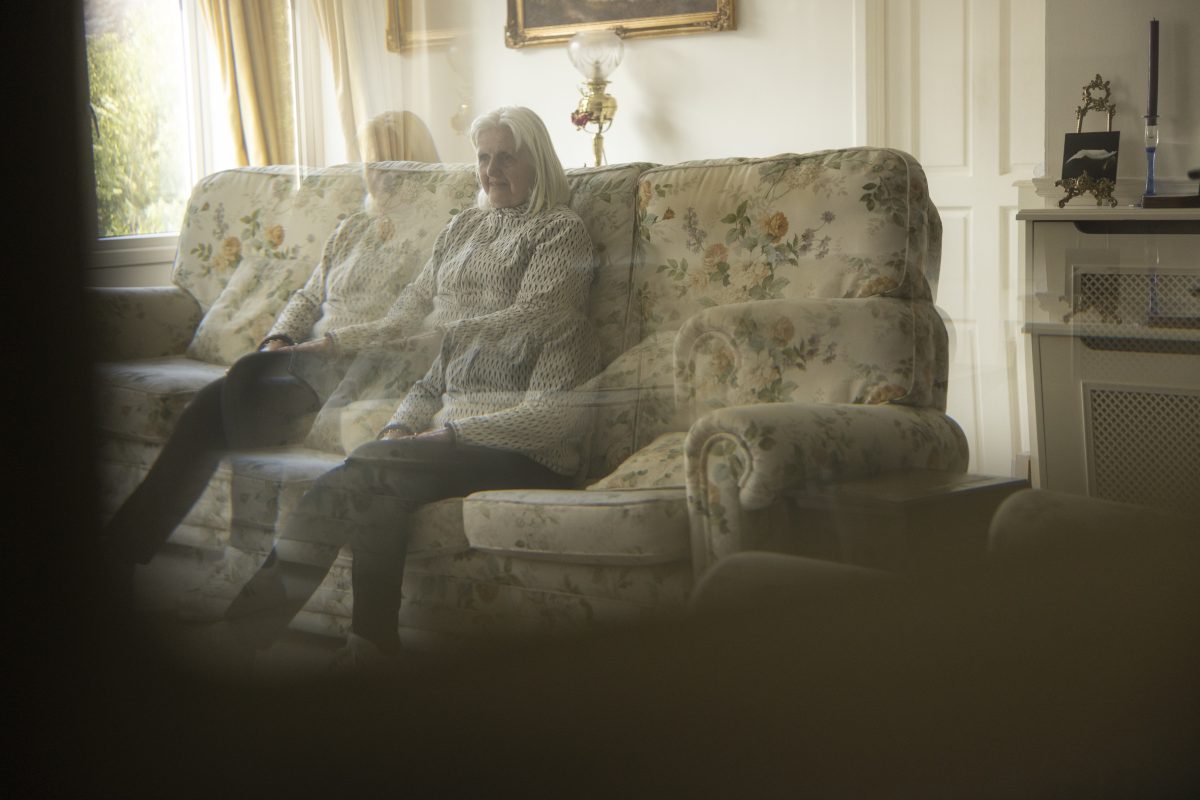
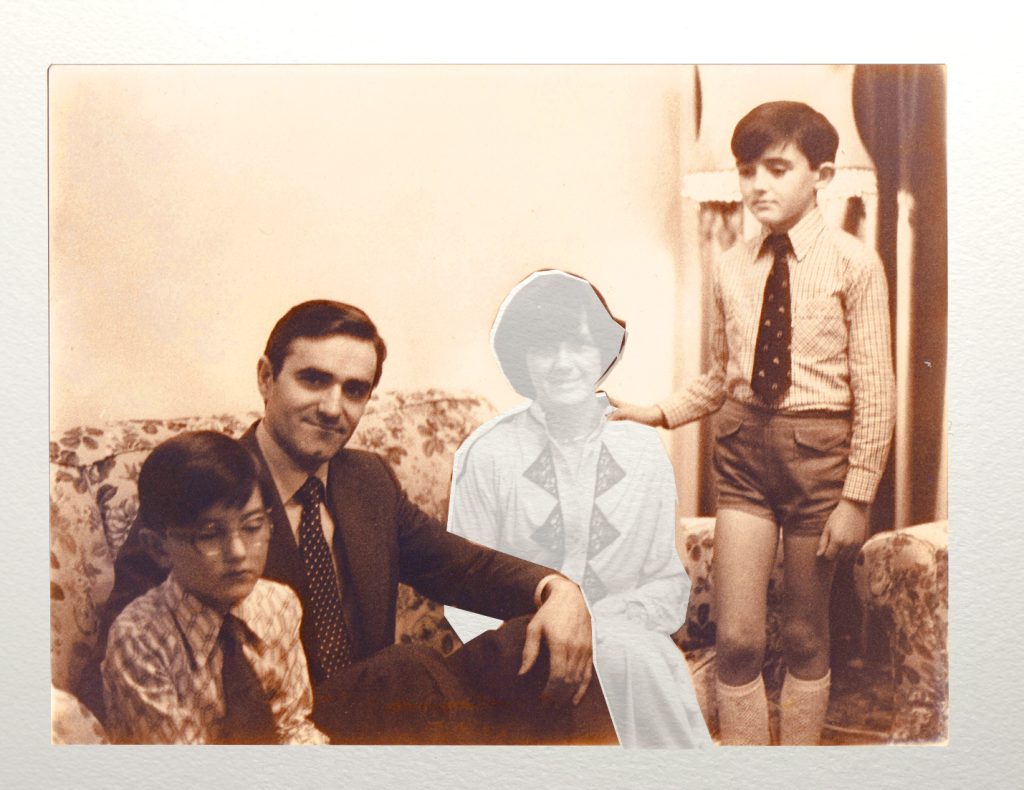
For the animation sections in the film, I wanted to cut up copies of old family photos and alter them, destroying and rebuilding them over and over again. There’s a shot in the film that Naryan, our DOP, shot on 16mm film. It’s a slow zoom in on my Mum, as she looks calmly into the camera. Ross wanted this shot to thread through the film and to deteriorate as the film proceeded. To alter this section, I printed over 600 frames out and drew, scratched, burnt, cut and overlayed each of the frames, then photographing each one and piecing it all back together. If you freeze frame the film you might catch some random stream of consciousness I was battling with at 3am while making these animations.
They’re too quick to catch, but I like that they’re gone before anyone can register them
For me, making the film was another artist expression, taking an idea and manifesting it. The idea that Ross and I had at the start is largely the same as the final product, whatever medium I uses it’s all about connecting with the viewer, and giving them some space to see themselves, a gap to slip through that reveals a truth in me, but hopefully resonates with them.
Film is one of the most complete art forms, so enveloping and engrossing, it’s given me the change to open up and be vulnerable, sharing my fears and terror at what’s happening. I still find it hard to watch the film at each screening as I know some small part will push me over the edge into tears. The fascinating part is how it’s often different parts that affect me each time. I’m truly honoured to have made this with a team that poured that heart into a little film that we had to make.
The film has also opened up new conversations with my father and brother, finding out things about our family history that we wouldn’t have shared if we’d not made the film. I’ve learnt so many things that could have been lost to time. Irish men are not great at expressing their emotions, so the catalyst of the film has helped us as a family to talk more.
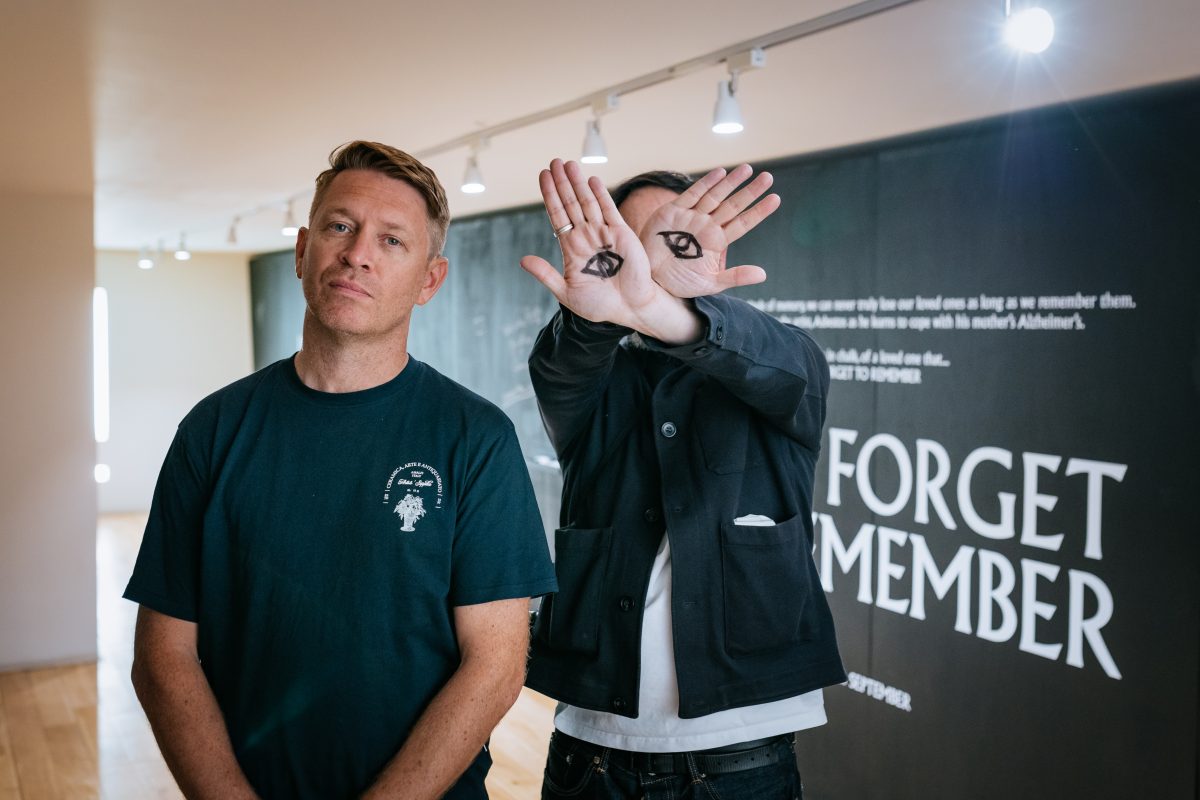
As a prolific Irish artist, Asbestos has been producing street art since 2003, utilising masks to convey narratives and elicit emotions. His works have been displayed worldwide, and he was nominated for “Best International Street Art 2021” for a mural that drew attention to the housing crisis in Ireland. In 2022 he collaborated with the band Idles at Roskilde festival in Denmark on a project called “I Beat Myself Up” where they smashed piñatas off their heads to encourage people to talk about their mental health. His art delves into society’s fixation with self-image while using anonymity to become more transparent and candid in his creations. Notably, he reveals his own vulnerabilities, providing insight into what it means to be human. By opening up to the public his work starts a conversation with the viewer making their contribution essential to his work and giving them a voice in it.
