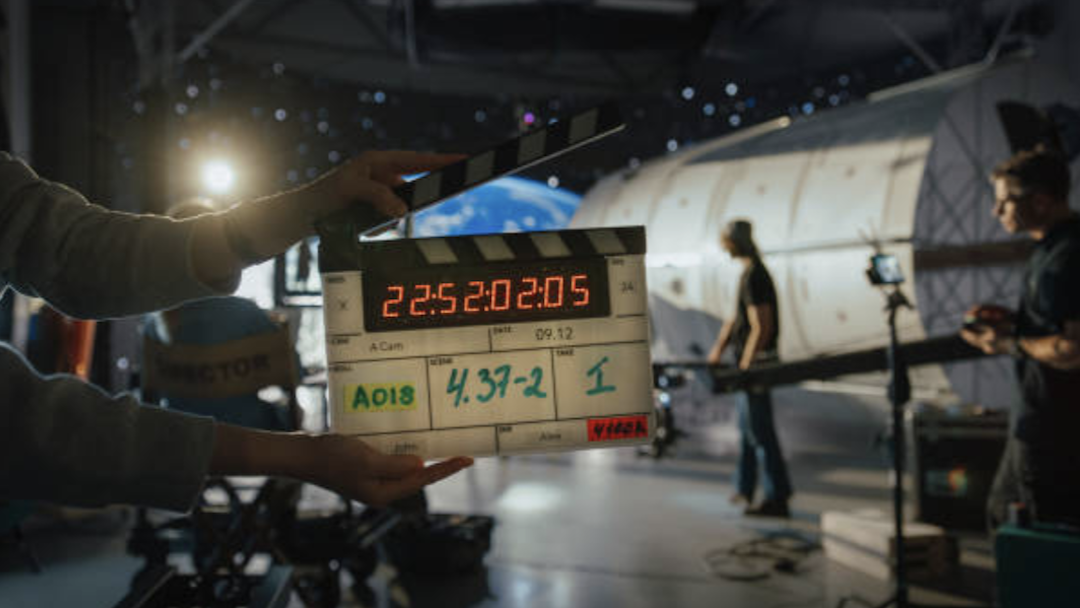

Well, a good direction is one that senses subconsciously that what we see is more than fantasy. It’s tethered, in some way, to the real pulse of science. If you are a filmmaker, you know how important it is to create futuristic worlds. Don’t just dream; they dig deep into scientific research, collaborate with experts, and sometimes even source real lab materials to make their vision feel rooted in possibility.
When doing so, they walk a fine line: too little verisimilitude and the audience disengages, too much rigid logic and the story sags under its own weight. This is how science and technology have evolved the film industry.
Science and Fiction in Filmmaking
If we talk about the earliest drafts, writers and directors must decide: how “hard” will the science be? Some films lean heavily on speculative leaps (warp drives, instantaneous teleportation), while others prefer to extrapolate near-future technologies. In practice, most land somewhere in between.
Science consultants are now regular collaborators in major productions. Their role is to vet scripts, flag inconsistencies, and suggest tweaks so that even the most imaginative scenes feel grounded. But these consultants also recognize that sometimes you must bend rules for narrative purposes. As Emilie Lorditch put it:
“Never let the science get in the way of a good story. Find ways to use the science creatively to enhance it.”
A key task is defining the “rules of the world” — the internal logic the film will obey. Once those rules are clear, audiences will tolerate creative leaps so long as they don’t break those rules.
Visual, Physical, & Narrative Consistency
Believability isn’t just about plausible tech. It’s also about consistency in visuals, motion, sound, and even narrative cause and effect. For example:
- Visual effects & physics: If the gravity on a moon is weaker, debris, smoke, and dust should behave differently. The VFX team often writes algorithms constrained by physical models to simulate such moments.
- Props & interfaces: Gesture-based interfaces in Minority Report were not pulled from thin air; designers consulted real gesture and motion sensor tech.
- Sound design: Even fictional gadgets benefit when their hum, click, or pulse is tied to familiar mechanical or electronic sounds (servo motors, digital pulses).
Science Props, Labs & Materials Behind the Scenes
When you see a futuristic vial glowing in a lab coat’s hand, the chances are, the prop team didn’t just guess a shape and color. They started in real science territory.
Prop Design Rooted in Real Materials
Prop designers often reverse-engineer existing research on biomaterials, polymers, flexible electronics, biofluorescent dyes, and even microscopy optics. When a film depicts a “bio‐interface chip,” the design may borrow from real neural interface technology. The trick is to exaggerate just enough to feel futuristic but plausible.
Filmmakers and studios collaborate with advanced research suppliers to get miniaturized components, lab-grade substances, or consultation on molecular structures. For instance, a production may consult with a supplier to obtain verified peptides and understand how certain peptides, proteins, or molecular visuals might behave or degrade over time.
Narrative & Thematic Science: Using Science to Tell Stories
Beyond Spectacle, the Best Futuristic Films Embed Scientific Ideas as Narrative Pillars. The tech becomes a metaphor, a conflict driver, or a thematic lens.
Science as Metaphor & Ethical Canvas
A film about engineered humans whose memories can be rewritten. On one level, it’s a science fiction spectacle; on another, it probes identity, agency, and trust. The scientific premise isn’t just window dressing; it carries emotional weight.
Worlds in which gene editing is common or atmospheric terraforming has begun entail social, political, and ecological consequences. Who holds power? Who’s excluded? Films that ignore these “ripple effects” feel shallow. Those who integrate them feel at home.
Conclusion
Good science fiction isn’t about predicting the precise future. It’s about projecting possibilities grounded enough to feel within reach and imaginative enough to inspire us to look outward, not just inward.

Abdullah Khan is the Head of the Digital Marketing Department at Guest Posting Solution. He helps clients grow their online businesses and occasionally writes blogs to share his experience with other professionals.
