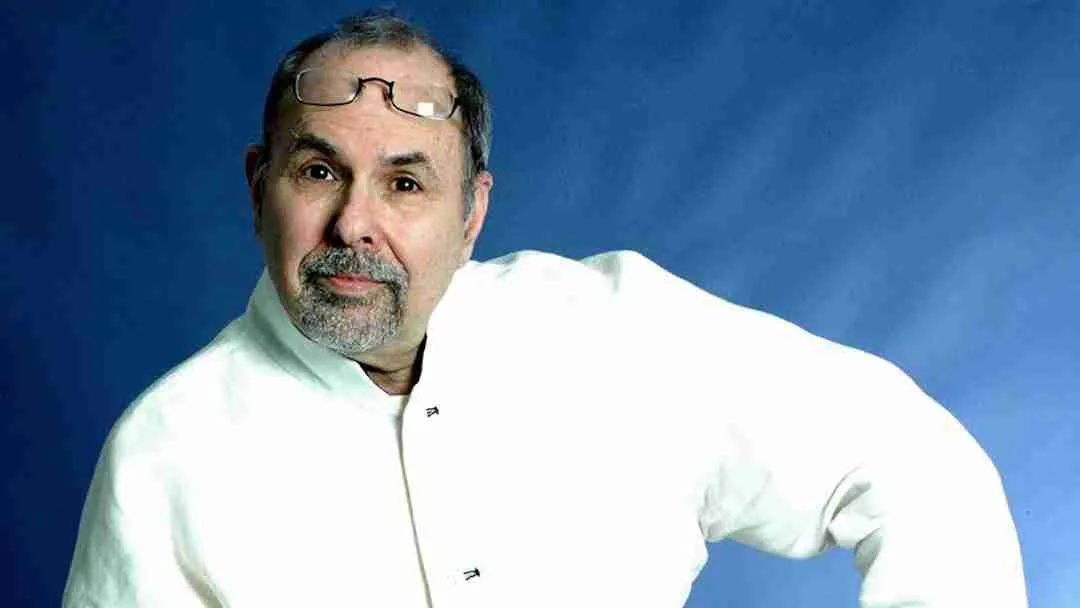

I’m a cranky old fart. Born in 1943, during WWII, at an Air Force hospital that my mom says “cost her $2.65.” No insurance. No paperwork. Just me, arriving in the middle of a world on fire.
The first movie I remember is “Bambi”. I was three. Disney animation. Forest fire. Bambi’s mom dies. I cried. And cried. And cried some more. I didn’t know a story on a screen could hurt that much—or stay with you forever.
As a teenager finally able to go to the cinema by myself—wow—my world exploded. I was drawn to the mega-budget studio spectacles, the “eye candy” epics: “The Ten Commandments” (’56), “Ben-Hur” (’59), “The Bridge on the River Kwai” (’57). These were grand, over-two-hour events with massive sets, casts of thousands, and glorious 15-minute intermissions where I could dash to the candy counter and refill my popcorn before the lights dimmed again.
But here’s the twist: those shiny epics didn’t spark my creative drive. The ones that did were the smaller, quieter films. Black-and-white. Focused on people, not pageantry. Movies like “High Noon” (’52), “On The Waterfront” (’54), “Rebel Without a Cause” (’55), and “12 Angry Men” (’57). They were driven by character arcs, not cavalry charges. They felt human in a way the blockbusters didn’t.
The 3 Movies That Influenced Me
When people ask me, “What movies truly introduced you to filmmaking?” I can narrow it down to three.
1. MARTY (1955)
Black and white. Ernest Borgnine as a lonely butcher trying to find love. No sweeping vistas. No spectacle. Just people talking. That year, Borgnine won the Oscar for Best Actor. A small, intimate film beat the Hollywood juggernauts. I was stunned. That’s when I started thinking: Maybe you don’t need the machine to make something great.
2. DAVID & LISA (1962)
By the time I saw this, I was in college and fully aware of “anti-Hollywood.” This was super low-budget—shot on 16mm, handheld—about two young people in a mental institution. Raw. Close. Real. The camera didn’t show off; it listened. And the kicker? It made thirty times its cost. That was another revelation: a film could be personal, rough around the edges, and still win at the box office. I started thinking in terms of low-budget, character arcs, handheld cameras, black and white, and—yes—profit.
3. EASY RIDER (1969)
Then came the cultural earthquake. Freedom. Rebellion. The New Hollywood wave crashing onto the shore. I wanted to make my version. Problem was, America was at war in a country I’d barely heard of, and I enlisted. Green Beret officer. ’65 to ’69. By the time I came home, my creative instincts were numb. Leading a film crew felt like leading a squad—only with less clarity.
It took fifteen years to thaw. In 1984, I finally said, “It’s time.” I went to Hollywood. Became a reader. Wrote coverage. Worked as a production manager on low-budget, Roger Corman-style films. Taught at USC, UCLA, NYU. And in 1992, I met Mr. Grove, and I unashamedly believe I encouraged Elliot to start Raindance with the pioneering spirit I first found in Easy Rider.
The rest, as they say, is history.
So thank you, “Marty”, “David & Lisa”, and “Easy Rider.” You were my roadmap to a filmmaking life—proof that small stories can have massive impact, that budgets don’t dictate brilliance, and that the anti-Hollywood path can be the most rewarding of all.
Were you fortuante enough to take the 2-Day Film School
Dov Smens revolutionised foirm school education with his 2z Day Film School
Were you on one of his weekend course iN La, London, Paris and other international cities? Drop your accolades into the chat box below!
At Raindance, We Still Believe in the Power of Small Films
If a lonely butcher, a pair of outsiders, and two bikers could change cinema forever, imagine what your story could do. At Raindance, we’ve championed bold, independent voices for over 30 years. We’ve seen filmmakers go from scribbling ideas in a café to walking the red carpet.
Your first step could be a short film, a micro-budget feature, or even a guerrilla 16mm shoot like “David & Lisa.” Whatever it is, don’t wait 15 years to start.
🎬 Take the leap. Join a Raindance course, submit to the Raindance Film Festival, or start building your first script today.
👉 Discover Raindance Filmmaking Courses.
Come As You Are
Raindance has always been a place where passion trumps polish. Where we make room for the films that wouldn’t otherwise have a home. Whether you’re a first-time director with a 3-minute short, or a veteran working outside the system, we want to see your work.
Because sometimes, the film that doesn’t fit anywhere else… is the one that changes everything.
Submit your film. Join the movement.
Raindance Film Festival Submissions →
Become a Raindance Member →
Expand your knowledge at the Raindance Film School→
The Independent Film Trust raises money for good causes.
Find out how to make an impact here →


My husband and I took the 2 day film school course in 2004, right after we got to L.A. He had a background in film and theatre, and spent several years working in the sound and grip departments on mostly independent films–but didn’t have the wherewithal to do much except small non-commercial projects for a number of years. Finally, we discovered a terrific story and a bunch of of undiscovered resources that we turned into a book, then a screenplay, and finally produced and released a feature length documentary. We used nearly EVERYTHING that Dov taught us, and against what many people were sure were impossibly odds, we finished the film in 2024, won two film festival awards (best feature film and best documentary) and released on the streaming services at the beginning of the year; And the Balls Roll On: The real story of the beautiful game of Skee-Ball. From understanding script/story, to logistics of insurance, finishing work, and everything in between, we owe a mountain of thanks to Dov–and I hope he reads these comments to know how much that two days in L.A. with him meant to us. Thank you Dov!