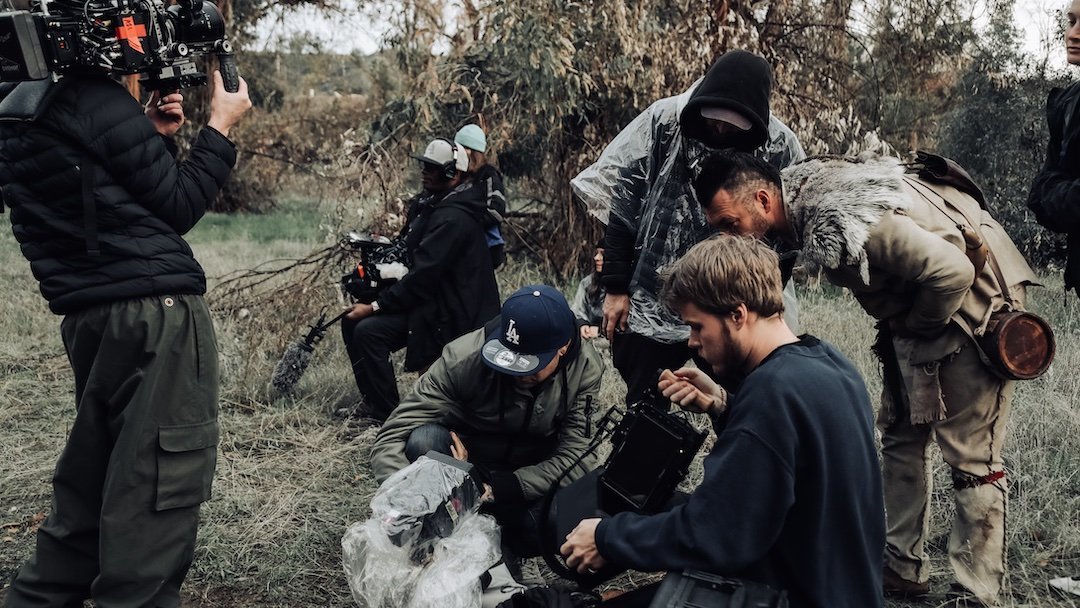

There were 43 fatalities and 150 life-altering injuries on film and television sets in the United States between 1990 and 2016, according to a study by the Associated Press. For aspiring filmmakers, such statistics coupled with the recent events surrounding the 2021 fatal shooting of Halyna Hutchins on the set of Rust underline the dangerous nature of being on set. Understanding what is involved regarding set safety is a great way to prepare for a long and successful career, and can help set the stage for a safe working environment. From the basics to the hidden dangers, it’s never too early to learn how to implement a positive culture of workplace safety on set.
Exploring the basics
For aspiring filmmakers, visiting a set and observing potential dangers can be a great way to explore the omnipresent nature of on-set safety regardless of genre. From cords on the ground to equipment lying around, it’s imperative to take into account the fact that workplace accidents can take place in a variety of settings — even if your set involves a seemingly innocent mock office (as even an unstable chair can pose a risk for injury). Displaying signs, regular inspection and maintenance of equipment, supplying personal protection equipment (PPE) are just a few of several key standards in a safe workplace.
Safety certifications also play a major role, according to Wrapbook, which work to indicate a standardized level of training and experience. “They essentially certify a given employee can perform their job safely or supervise the safe performance of others,” explains the site. Such certifications also work to set standards for workplace conditions — simply put, requirements will ensure that individuals on set are familiar with regulations. As a result, safety certifications can work to reduce some of the most common production safety issues, such as tripping and fall hazards, electrical hazards, pyrotechnic hazards, etc. However, Wrapbook goes on to point out that safety certification requirements are “sparse” in the production industry, thus underlining the valuable role of personal responsibility in addition to guidelines from different unions and guilds — something that can be achieved with an overall safety strategy before the start of production, notes Wrapbook.
Risks vary from set to set
Wrapbook cites a risk assessment as a ‘fundamental component’ in protecting your production company, which involves exploring the vulnerabilities before a problem even occurs. For example, a production involving firearms would involve a risk assessment that necessitates the understanding of the requirements surrounding firearms. It’s imperative to note that some film sets come with heightened safety risks compared to others. Action, horror, and films that involve live animals, for instance, can all bring additional risk due to their unique nature. The 1973 film The Exorcist is a perfect example of this. The film set was believed to be cursed, with deaths, a ‘freak fire,’ and injuries taking place, according to The Sun.
One of the accidents on the set of The Exorcist involved Ellen Burstyn, who experienced a spinal injury when hoisted around on a harness. According to a 2018 interview with The Guardian, Burstyn was left on crutches for the rest of the production. However, this wasn’t the only back injury to take place on the set of the horror film — Linda Blair, who portrayed Regan, fractured her spine on set — a moment that was actually shown in the movie. According to Linda in a USA Today interview, the poor rigging contributed to her developing scoliosis. The rigging in question was used during the bed scene, where the possessed Regan flails around. On the Cursed Films TV show, she explained: “In this particular take the lacing came loose,” she said. “I’m crying, I’m screaming, they think I’m acting up a storm. It fractured my lower spine.”
Hiring the right people — and beyond
As an aspiring filmmaker, one of the most important things that can be done to enhance safety on set is to make safety a priority from the very start. Wrapbook notes that due to the fact that safety heavily relies on personal responsibility in the industry, hiring individuals who prioritize safety is imperative. From the actors to sound technicians, the first assistant director and key grip, ensuring that each individual is responsible and possesses the right certification and training is an ideal way to set a solid foundation. Creating a workplace culture that embraces safety across the board, however, goes much further than hiring the right people.
Indeed notes that a culture of safety in the workplace “refers to positive attitudes toward keeping employees safe while they do their jobs,” further noting that effective safety culture includes positivity and proactivity. As an aspiring filmmaker, it’s imperative to ensure that an open line of communication is present on set, that everyone is encouraged to report accidents, and that everyone is encouraged to follow safety protocols. Indeed details several characteristics of safety culture — these include maintaining safety as the highest priority, ensuring that everyone is accountable for maintaining standards and procedures, ensuring that improvement is continuous and that employees attend regular training (where applicable), to highlight just a few. Aspiring filmmakers can apply each of these when on set in order to ensure the safety of all throughout the duration of filming.
Instilling a positive culture surrounding safety on set can sound like a challenging endeavor — especially when considering Hollywood’s past of accidents, injuries, and tragedies. By focusing on the basics, assessing the risks of each set, and hiring the right people, instilling a culture surrounding workplace safety goes well beyond the basics.

Briana spent seven years working in independent film production before taking a step back to start a family. She has since returned to her first love of writing and enjoys contributing to a range of publications, both printed and online.
