
Independent filmmakers leverage film festivals. But film festival roles have seen dramatic changes over the past two decades. Filmmakers struggle with distribution despite the power of the internet. Film festivals themselves seem to come and go – the festival attrition rate seems to be higher than ever.
So what is the point of a film festival? This is something I’ve struggled with since Raindance Film Festival started way back in 1993. Nonetheless, Raindance has continued and indeed has managed to flourish. today where I sit from Planet Raindance I feel that more than ever a film festival roles are more important for independent filmmakers than ever.
All film festivals are the product of the vision of their creators and the result of thousands of hours of dedicated staff who work, often for little or no financial reimbursement to put on their film festival. Usually, as with Raindance – with little or no public funding. Without wanting to sound bitter (I’m not) a film festival, properly run, offers these six terrific benefits for independent filmmakers.

Film festivals offer theatrical distribution
The role of a film festival is to deliver a room full of people to watch and admire your work.
The fact is independent films rarely get played in a cinema. A festival plays films in a cinema. Filmmakers can use this for their red carpet screening hoping to attract an audience. Many filmmakers use a film festival tour to kick-off for their online distribution.
Film festivals offer awards
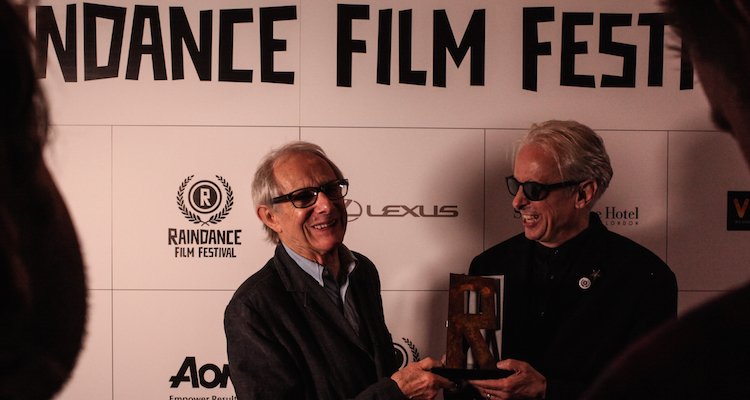
There’s nothing quite like being nominated for an award. And nothing quite as sweet as winning an award – slamming the laurels onto one’s website and postcard for your film. Although the festival you attend might not be known at all, the mere sight of a laurel wreath somehow adds credibility to your film making it a little bit easier to convince someone else to watch your film.
As a filmmaker one tends to favour festivals with key jury members who presumably watch your film and deliver to it the accolades you know it deserves.
Film festivals develop a filmmaker’s brand
Festivals like Raindance release a hundred films in a week. In order to attract audiences festivals describe their catalogue as a series of genres. Sometimes the festivals are genre specific. London, for example, has the famous Frightfest and London Sci-fi festivals.
Getting the branding right for your film (and your career) is the trick. for example: here is a list of essential horror and fantasy film festivals.
Whichever festival you choose, and whatever festival accepts your film, make sure that it fits your branding.
Festivals start the hype
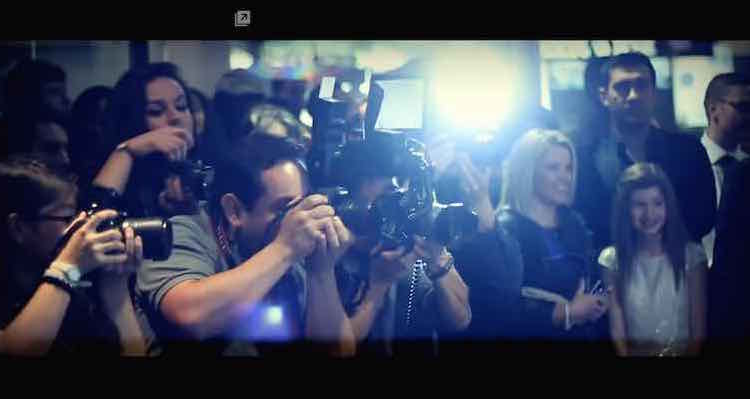
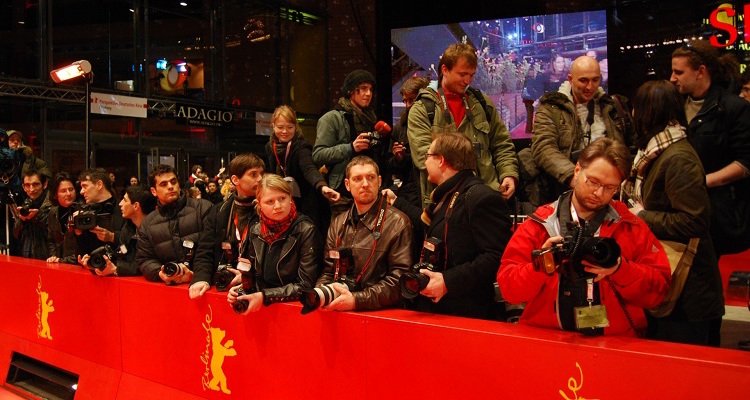
The unique aspect of screening at a film festival is how the goals of the festival and the filmmaker merge. Both sides need to get people talking about the film. the festival needs the hype to attract punters to the cinema. And a filmmaker needs good reviews to add to their press kit. Hiring a press agent is often a good strategy for a filmmaker in order to maximise the festival apprearance. And hiring a publicist is an essential for a film festival.

Film festivals are a test screening
Many film screenings at Raindance are essentially feedback sessions. Filmmakers pass out survey forms and questionnaires. It’s not uncommon for a film to be recut after a festival screening. The festival screening itself is interesting here at Raindance because our programmers choose films from all over the world. often a film that plays well in its native country, like Canada or Japan, won’t gather the same type of audience response as it has done in its home territory. Festivals are a cost-effective way for filmmakers to test their films in front of an impartial audience.

Film festivals provide a community
It’s at a film festival where you meet like-minded people – not just festival attendees but fellow filmmakers. Festivals are a great place to meet new collaborators, and also to bask in the warmth of praise for your work. One of the key film festival roles is to provide an environment for networking.
Did You Know?
- Raindance Film Festival is considered one of the top fifteen film festivals in the world?
- Raindance has a Higher Education programme offering HND, BA and MA in Filmmaking and Screenwriting?
- All Raindance members support indie film, and enjoy a range of benefits

Photo Credit: Bertie Watson
I founded Raindance Film Festival in 1993 because the British film industry was closed, polite, and congratulating itself while shutting new filmmakers out.
I co-founded the British Independent Film Awards in 1998 because British indie film deserved more than a shrug, a pat on the head, and a Tuesday night screening.
Raindance didn’t start as a brand. It started as a rebellion: film training without gatekeepers, a festival without permission, and a community built by filmmakers who weren’t waiting to be invited in.
Later, we took it global: Toronto, Vancouver, New York, LA, Berlin, and Brussels, because independent film doesn’t belong to one city, one class, or one accent.
I’ve produced 700+ short films and seven features, including Deadly Virtues (2014) and ALICE, which won the SXSW Grand Jury Prize (2019) not because someone “discovered” us, but because the work earned its place.
I’ve written three books used by filmmakers worldwide because too many courses taught compliance instead of survival.
In 2009, I was awarded a PhD for services to film education, ironic, given that most of my career has been about tearing down the rules that education insisted you follow.
I don’t believe in waiting for permission.I believe in making work, building systems, and forcing the industry to catch up.
Specialties: Independent Film (the real kind) · Producing · Writing · Film Education · Festivals · Breaking Broken Systems
Check out my new Substack for in depth Free Articles:
