
Everyone’s being polite about vertical dramas. They shouldn’t be.
Because this isn’t “a new storytelling form.”
It’s a behavioural business model disguised as storytelling.
And if you don’t understand that, you will fail in this space.
1. This Isn’t Film. It’s Mobile Gaming With Actors.
Let’s stop pretending.
Vertical drama didn’t evolve from cinema.
It evolved from mobile monetisation mechanics.
- Coins.
- Paywalls
Micro-transactions.
You’re not watching a story.
You’re being nudged into spending.
That means one thing
👉 Addiction beats artistry. Every time.
If your episode doesn’t hook, spike, and trap attention immediately, the viewer doesn’t just leave.
They don’t pay.
2. Subtlety Is Dead on Arrival
Forget slow burns. Forget world-building. And forget nuance. You don’t have time.
Everything is:
- On-the-nose dialogue
- Aggressive wardrobe signalling
- Stock footage shorthand (mansions, cars, crashes)
- Performances dialled up past realism
Why?
Because the viewer isn’t leaning back in a cinema.
They’re half-distracted, thumb hovering, ready to bail.
If they have to think, you’ve already lost them.
3. Cliffhangers Aren’t a Tool. They’re the Product.
Traditional storytelling uses tension.
Verticals weaponise it.
Every 2–3 minutes you are required to:
- Spike curiosity
- Interrupt resolution
- Force continuation
You are not writing scenes.
You are engineering compulsion loops.
That’s the job.
4. Speed Wins. Craft Loses.
A vertical series gets made in 1–2 months.
Around $150K for ~100 pages.
Do the math. There is no time for perfection.
On set, the hierarchy is brutal:
- Speed
- Coverage
- Clarity
- Everything else dies
Lighting? Secondary. Wide shots? Mostly pointless.
Beautiful composition? Nice, if you can do it in 30 seconds.
If it slows you down, it’s gone.
5. The Frame Killed the “Film Look”
Vertical is not cinema. It’s portraiture.
80% of what you’re shooting is:
👉 A face
👉 Another face
👉 A slightly different face
Wide shots collapse on phones. Detail disappears. Scale becomes irrelevant.
So you stop shooting for space.
You start shooting for faces and information density.
6. Movement Is a Luxury You Can’t Afford
You want a dolly shot? Fine.
Now ask yourself:
👉 Will editorial cut it in half?
👉 Will it even survive the pacing?
👉 Was that time better spent getting another close-up?
Most of the time, the answer is obvious.
Verticals don’t reward elegance. They reward efficiency.
7. Inserts Are Doing the Heavy Lifting
Because the screen is small and the pace is brutal:
👉 Props need to scream
👉 Plot points need to be obvious
👉 Visual information must be undeniable
If the audience misses it, you lose them.
So you underline everything. Then underline it again.
8. Bigger Budgets Won’t Save You
Here’s the part people really don’t like hearing:
More money doesn’t fix this format. I’ve heard it directly from EPs
They tried bigger budgets. They tried more “cinematic” approaches.
Did it improve results? Not meaningfully.
Because the format itself compresses value into:
- Faces
- Speed
- Retention
Not:
- Scale
- Craft
- Atmosphere
You can spend more. The audience won’t care.
9. What Actually Matters Instead
If you want to win in vertical:
- Casting matters
- Wardrobe matters
- Hair & makeup matter
Why?
Because the frame is dominated by faces.
You’re not designing worlds.
You’re designing immediate visual signals.
10. The Truth Nobody Wants to Say
Right now, verticals are not evolving toward cinema.
They’re evolving toward:
👉 Faster hooks
👉 Shorter loops
👉 More aggressive monetisation
Could that change? Maybe. But not yet.
Because the current audience behaviour doesn’t reward it.
And until behaviour changes, the format won’t.
Final Thought
If you try to make a “proper drama” in this space, you’ll burn time, money, and goodwill.
Because verticals don’t reward ambition.
They reward compliance with the model.
Learn the game. Or don’t play.
If you want to go deeper into how this connects to story design, retention, and distribution, happy to unpack it.
But only if we’re being honest about what this actually is.

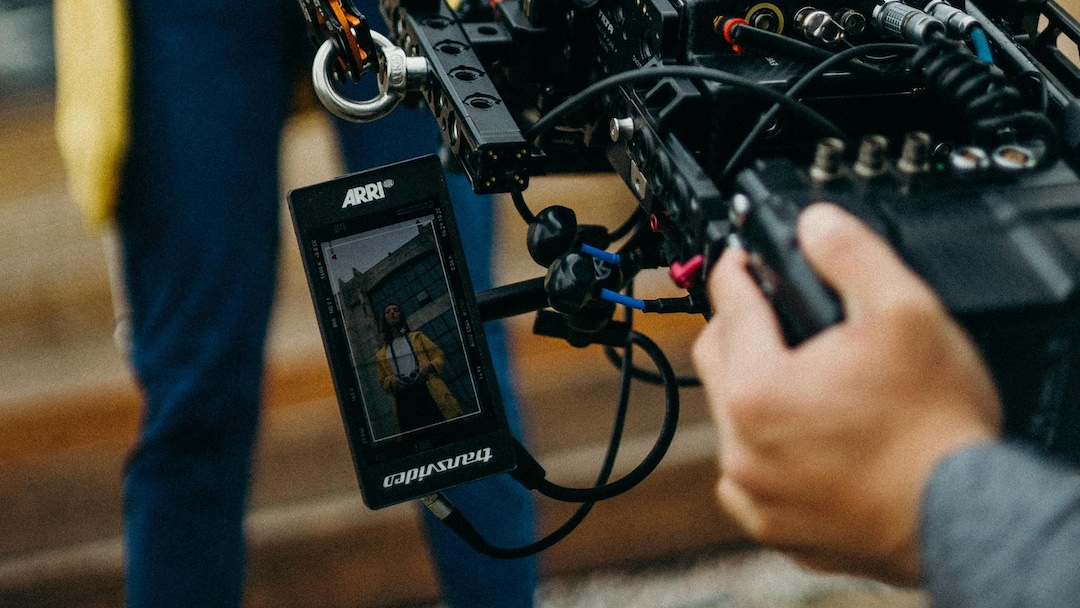
Photo Credit: Bertie Watson
I founded Raindance Film Festival in 1993 because the British film industry was closed, polite, and congratulating itself while shutting new filmmakers out.
I co-founded the British Independent Film Awards in 1998 because British indie film deserved more than a shrug, a pat on the head, and a Tuesday night screening.
Raindance didn’t start as a brand. It started as a rebellion: film training without gatekeepers, a festival without permission, and a community built by filmmakers who weren’t waiting to be invited in.
Later, we took it global: Toronto, Vancouver, New York, LA, Berlin, and Brussels, because independent film doesn’t belong to one city, one class, or one accent.
I’ve produced 700+ short films and seven features, including Deadly Virtues (2014) and ALICE, which won the SXSW Grand Jury Prize (2019) not because someone “discovered” us, but because the work earned its place.
I’ve written three books used by filmmakers worldwide because too many courses taught compliance instead of survival.
In 2009, I was awarded a PhD for services to film education, ironic, given that most of my career has been about tearing down the rules that education insisted you follow.
I don’t believe in waiting for permission.I believe in making work, building systems, and forcing the industry to catch up.
Specialties: Independent Film (the real kind) · Producing · Writing · Film Education · Festivals · Breaking Broken Systems
Check out my new Substack for in depth Free Articles:
