

Q: How did you make your movie, Brooke?
A: I just… did it. And I didn’t stop doing it until well after the premiere and streaming launch.
Context: I’d spent years writing films for other people to direct, films that didn’t get made. Then I spent six years developing a film for myself to direct – Polly Freed, based on one of my plays. I like to say we did everything except raise the money – and so, obviously, that didn’t get made either. Then, inspired by that infamous Duplass speech, during the Pandemic I got real with myself and decided to just – make it happen. And not stop making it happen.
Previous projects had fallen apart when movie stars either attached and bailed or failed to attach and so money was never raised. The model I’d been taught was: write the movie, make a pitch deck, assemble a cast, then go for funding. But without the movie star attachment… the project lost steam.
So in that vein, here’s my advice:
Cast people you know
When I wrote Ramona at Midlife, in the early days of the pandemic, I always knew that the lead role would be played by my dear friend Yvonne Woods, an actress whose intelligence and soulful grace have inspired me since grad school. I cast the entire movie myself by calling friends I love working with, asking them if they’d want to work with me. Everyone said yes, and I saved money by not hiring a casting director.
Embrace what you know and what you have access to
In my case, this was a community of friends who are actors and who love working on great scripts. On that note, I already know a lot about their process (I trained in the theater, first as an actor and then playwright) so I felt confident there. I’ve been a writer for 30 years so I knew my script was solid.
Learn everything you don’t already know
As soon as the script was done, I started attending webinars to learn producing skills. It was Pandemic time and everyone was online. I attended Sundance Collab and Film Fatales webinars, including this one on microbudget filmmaking and interviewed anyone who would talk to me. Specifically I was looking for intel on raising money.
Funding your feature
So I asked anyone I knew who had successfully raised money for a passion project, how? I talked to filmmakers, heads of successful nonprofits, even former development associates asking them all, what’s the key?
They all told me to start with lists. First, I made a list of resources I could tap. What and who do I already have access to? Actors (see above) and then, I found the locations. I was writing for Western Queens, where I live, so I started asking people if I could shoot in their space. Through my community, I was able to get more than half our locations donated. I also found my caterer this way: she’s my neighbor.
So here are the lists:
List 1: What do you have?
List 2: What do you need?
List 3: Who do you already know who might know someone who has what you need?
Outsource!
I hired a line producer I met in a Facebook group to make the initial budget (which I adjusted after consulting producer Julianne Hausler. The original budget would have been something like 550K in New Jersey with the tax credit, Julianne said “Do it in NYC for half that.”) I hired an incredible graphic artist (who is also a filmmaker!) to make a lookbook. And then I went looking for a producing partner.
Find Your People. Your Collaborators. Your Tribe.
Most of the producers I already knew or had worked for as a writer weren’t trafficking in movies this small. I needed someone younger and scrappier, unafraid of a truly no-low-budget set. I found Kristen Vaganos through a mutual friend/colleague. Kristen is an actress who’d recently graduated from NYU and had experience producing. She had just worked on her first feature and was optimistic and confident about doing another. We talked on the phone, met in person and… it clicked. Kristen just seemed up for it. I trusted my gut.
-
-
Don’t be afraid to ask for money. With my earlier project, Polly Freed, my producing partner and I did everything except raise the cash. So fundraising was always at the forefront of my mind. And to my great surprise, I loved raising money! Most women are socialized not to talk about money, let alone directly ask for it. I’ve always said, we can ask for sex more easily than we can ask for money. So I was excited to smash that internal barrier and learn to ask for what I needed. After all, it wasn’t for me, it was for Ramona, a project I believed in fully. I drafted an email and sent it to every single person I knew. Again, I made three lists: people who had experience, people who had resources and/or anyone who’d previously supported my work as a playwright. I wrote to every single person on my list. And I asked for their support. We raised two thirds of our budget through private equity, a very very small percentage through crowdsourcing, and the rest through the website Slated.
-
Talk to your idols. Joey Soloway said, “Imagine you’re the mayor of a town called Ramona and your job is to get people to move there.” A friend introduced me to Ben Kasulke, who had been Lynn Shelton’s DP, and Ben generously talked me through his and Lynn’s prep process. I’m lucky to have the amazing Peter Hedges as one of my dearest friends and mentors. Peter talked me through my script, scene by scene, as if we were at the Sundance Labs. I was used to doing this as a writer, for story logic, but Peter talked to me like a director. Additionally, I took people to virtual coffee dates (on Zoom because it was still pandemic-era) and sent them coffee or bottles of wine as a thank you for sharing their time and wisdom. I asked everyone who’d made a micro budget first feature: Best practices? What do they wish they’d known? What mistakes did they make that might have been averted? Talk to anyone and everyone whom you have already worked for or with, anyone who might help And send them something afterwards, even if it’s a gift card for coffee, to acknowledge the gift of their time.
-
Be flexible
When our dates changed, Kristen and I adapted. When we gained or lost access to a given space, we re-routed. When we lost an actor (only one!) we replaced him. I trusted the story and I trusted my team. I trusted Kristen. We were good business partners.
It won’t be perfect
When we couldn’t afford a post house, I learned that freelancers are rockstars. When it didn’t work out with any particular member of the team, which really only happened once, I became open to meeting new people. And Thank God for that. Michelle Botticelli, our editor, came into the project late but was really able to make sense of the footage in a way that challenged me to do some of my best work. Together we found the moments that had felt elusive in that first cut. And I found Michelle through a terrific group of female filmmakers that I’d worked with years prior.
Embrace legal
We were lucky to find Sara McFarlane at E/S Collab. Sara did all of our contracts and gave us tactical advice so that we’d be ready for anything that came up, including distribution. Because once we’d finished the film (and we premiered during the Strike, so we had to wait until its resolution to start selling)… and realized that selling it would be a tall order. We had a small feature about a middle aged woman without recognizable movie stars… so I turned to FilmStack, specifically Jon Reiss, Christie Marchese and Ted Hope, in order to learn best practices here too. We sold streaming rights, reserved theatrical and educational rights, and we’re still engaged in bringing the film to her audiences.
Summary
I wrote the script in 2020. Put the team together and educated myself via webinars, reading and interviewing people in 2021. Started fundraising in earnest at the tail end of 2021 and pitched my heart out (despite Covid, parenting a middle schooler and working assorted jobs) so that we could start production in June 2022. I pursued creative mentorships and creative advice as production came nearer. Started hunting locations early 2022. We shot for fourteen days (with a pickup weekend a few months later) in June of 2022, started post in August of 2022 and finished the film by early 2023. We premiered at The Bentonville Film Festival in 2023, introduced by Geena Davis herself. We sold streaming rights a year later and launched on platforms in February 2025. It was totally and completely “Non-De.”
Ask me questions! I’m happy to share what I learned!
The bottom line is: The system is broken. Make your own stuff. And make stuff you love, not stuff you think they’ll buy.
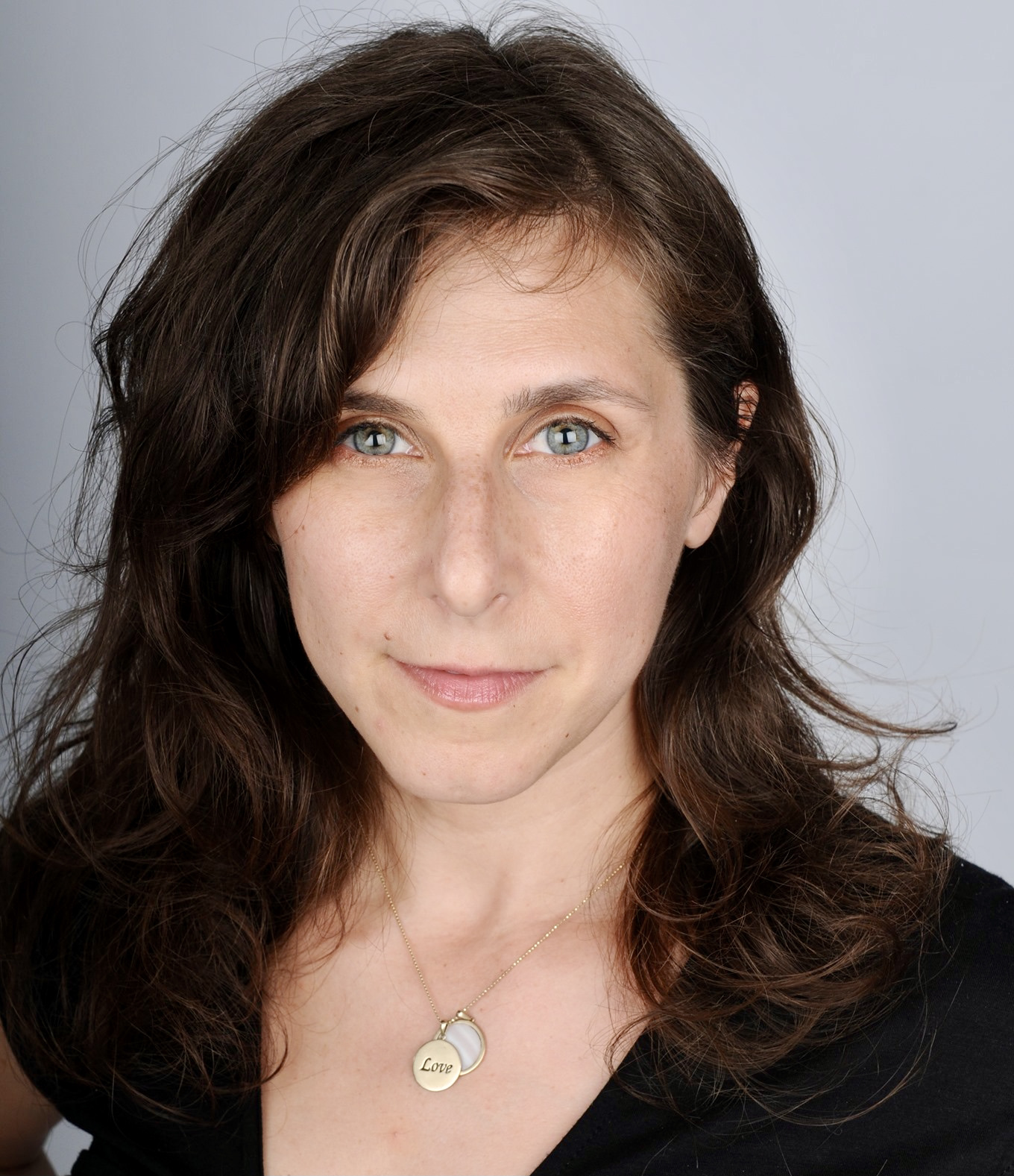
Brooke Berman’s feature debut Ramona At Midlife premiered at Geena Davis’s Bentonville Film Festival and has screened at festivals including: Woodstock, Heartland, Mystic (Audience Choice), NYITFF (Audience Choice, Best Feature), Florida Film Festival, Pasadena International Film Festival (nominated for Best Actress and Best Feature), Omaha Film Festival, and Ridgefield Independent Film Festival where it won the prestigious Fountain Award.
Brooke trained as a playwright at the Juilliard School. Her plays have been produced and developed across the US at theaters including Steppenwolf, Soho Rep, Williamstown Theater Festival, Naked Angels, MCC, Primary Stages, The Humana Festival, and The Bay Area Playwrights Foundation. Internationally, her work has been developed at The Royal Court and The National Theatre Studio in London and Pentabus and produced at Red Stitch Theatre in Australia.
Brooke adapted her play Smashing for Natalie Portman and went on to write features for The Mark Gordon Company, Vox Films, Fugitive Films and Red Crown. She adapted and directed the short U4G which premiered at the Aspen International ShortsFest where it won Audience Special Recognition. ALL SAINTS DAY, a short film Brooke wrote, directed by Will Frears, won Best Narrative Short at the Savannah Film Festival and played at the Tribeca Film Festival. Brooke’s feature POLLY FREED was chosen to be part of New York Stage and Film’s Screenwriters Lab and selected as part of the MOME (Mayor’s Office of NYC) inaugural finance lab for female filmmakers and NYWIFT From Script to Preproduction lab. PF has made it to “second round” for Sundance Screenwriting Labs two years in a row and won Best Screenplay at the Toronto Independent Film Festival in 2020.
Brooke’s memoir No Place Like Home is now available on Audible.
