
Why does nobody tell you how horrible it’s going to be when you graduate university? Suddenly going from three years of thinking you’re a grown up, totally independent, with everything figured out, to being back in your parents’ house, in your 17-year-old-self’s bedroom (which is the ugliest shade of grey you’ve ever seen), in Derby (where art and culture is almost non-existent) with absolutely no prospects of any kind (perhaps a little dramatic but it was a hard time for me). I felt lost, lonely and a little bit like my dreams were being slowly ripped from me as the cold harsh reality of the real world set in. I couldn’t even get a job as a Christmas elf, which coming out of a three-year Theatre and Performance Studies degree, was about the most degrading thing that could possibly ever happen to me.
It’s hard when you know that what you’re really good at is telling stories and making people laugh, and the jobs which you would really excel in are buried deep in an industry that won’t let you in if you don’t have any experience. And I had no experience. A couple of student plays (of varying levels of good) and that was it. I was qualified for nothing.
And then one day, my dad sat me down to have a chat about my future – now I love my dad, but I was in a fragile state and at the time I genuinely would’ve rather endured several hours of Chinese water torture than have a discussion about my bleak career prospects with him.
Many hours and a spreadsheet I didn’t understand later, my dad said, “what about The Pitch?”
The what?
“It’s a short film adaptation challenge.” I was entirely unmoved – I had never written a film (I was a theatre girl through and through and had no intention of wavering) and I had no desire to write an adaptation, biblical or otherwise – it just wasn’t my thing. And on top of all that – the final deadline was in less than a week. As far as I was concerned, it wasn’t going to happen.
I was beyond reluctant, but my dad would not stop pushing it.
I didn’t (want to) have any ideas, but my parents were only too happy to make suggestions (much to my annoyance). In the end, I mainly started to think about it in order to get my dad to leave me alone (sorry Dad). The only way I could get myself to think about it was to ask myself: How could I use this opportunity to talk about something that I actually care about?
And then the pearl merchant (a story that I’d known of since I was a little girl) and the neurodivergent girl who wants to find the perfect jumper (a topic which means a lot to me) popped into my head like two perfect light bulbs, shining brightly into the dark slump I’d allowed myself to fall into. I can’t really remember what came first – probably the parable. I imagine my mum suggested it while I wasn’t listening (sorry Mum) and it somehow managed to worm its way into my subconscious. To begin with, I considered it an “okay” idea, or at least one that had potential. I guess I could probably apply. It’s you and me, Kitty. Our story against the world.
I didn’t tell anyone when I applied because I didn’t want to have to tell anyone when it inevitably didn’t work out. I’d been rejected from at least 20 jobs/opportunities (5 Costa Coffees – why do you hate me?). I was never going to make a film. I knew I didn’t stand a chance.
But, against all odds, I kept progressing further in the process. ‘In consideration’, and then… a finalist. No one was more surprised than me. I had a horrible feeling it might’ve been a mistake. But no, there it was: bubbly barmaid, unsuccessful-elf, Costa-reject Lizzie Hart had made the top 10. Top 5 in my category. Cue the unnecessarily intense panic. Naturally to ease this panic, I decided to stalk all the other finalists in great detail to see exactly what I was up against. Obviously, this only made things worse. In my mind they were four titans of comedy, all already making films, with incredibly funny ideas I could never even dream of thinking of. What was my silly little story about a girl who loves jumpers doing mixed up in all this? It’s a terrible thing to say, but I genuinely thought I was their token clueless graduate who was never going to win, but they brought along anyway, for the sake of “inclusivity”. This was entirely due to my own intrusive thoughts, and postgraduate-sadness, because I was only ever met with unfathomable encouragement and warmth by everyone involved from start to finish. The truth was that I was really scared of being disappointed again.
So scared, in fact, that I cried all the way to Oxenholme (never try to get a train to Windermere on a Sunday). At one point a woman leant over to me and said “No man is worth all those tears, darling” which made me laugh so hard (and a tad maniacally) she moved seats (out of embarrassment or fear I don’t know).
But when I got there, my fear started to melt away. I stood in a room full of incredibly talented people, and they were laughing at my jokes. It’s like I suddenly remembered I was funny. The titans that walked into that hotel were totally mesmerising; a lady with a magical laugh, a mysterious modern-day Gepetto, and a man in a yellow beanie with an idea so incomprehensible it made my sides split with laughter just thinking about it.
One of my personal favourites (at least in the first 25 minutes) was a man in a lovely jumper with a bowlful of tomato soup and a sweet story about a lonely robot. He felt like the right person to sit next to. After a moment he leant over to me and whispered, “Are you nervous?” It took everything in me not to cry again. “Yes,” I said. “Me too,” he replied. Thank you David, for not looking like an unshakeable titan – I couldn’t have got through it without you.
It’s safe to say I cried at least 34 times throughout the whole experience, from submission to now (and I imagine plenty more to go). I’m nothing if not an extreme feeler. At the residential alone, I cried 8 times: alone, on camera, outside, in my room, in the shower, and even in a toilet cubicle whilst reciting lines of Dinnerladies in order to calm down before I pitched to other people for the first time. Throughout the whole weekend I bounced back and forth between feeling like a tiny mouse girl and a hilarious divalicious diva, so as you can imagine it was an exhausting few days. I was falling in love with the idea of making a short film (a feeling I never anticipated having) and every so often being hit by a wave of excruciating panic when I remembered how pitifully underqualified I was.
The mentoring and advice I received from Justine Hart, Jackie Sheppard and Luke Walton (actual real-life professionals), although a little intimidating, was utterly invaluable, and has re-shaped some of the ways I approach storytelling. The titans I had created in my head slowly turned into humans, all beautifully creative and unique. They were all so kind and generous with their knowledge of film and the industry surrounding it. I feel I should credit a lot that I learnt throughout the process to the nine of them too. Somewhere in those two days, it stopped being a competition altogether and became the most supportive family of storytellers, who all became as invested in the success of each other as in themselves. I would’ve happily lost to any one of them.
That being said, as I watched the world whizz by on the train ride home, I realised how badly I wanted this. And I had a feeling that maybe I could do it.
I spent the next month trying to write a pitch that made me come across as an experienced filmmaker, or at least gave the impression that I know what I’m doing. I read screenplays, directors’ interviews and a filmmaker’s handbook so confusing I had to read each page about four times. I was trying to learn everything I could about making films in a month, because I was so desperate to prove I could do it. I thought about my pitch pretty much constantly, with Hounds of Love, by Kate Bush on a loop inside my headphones to help me think about Kitty, about her story. Then about a week before the finals in London, I had a sudden realisation: I was not an experienced filmmaker (obviously) – that’s not why I’d made it this far (obviously). I didn’t have any other short films under my belt that I could send ahead to prove why I should win over anyone else. I had no real knowledge, no credits, no IMDB page, nothing.
But what I did have, as I told the judges in my pitch, was an ear for what is funny, an eye for what is beautiful, and a really great story. I had Kitty. She’d been with me from the start, crying with me in the toilets, whispering silly jokes in my ear while I was trying to sleep, wiping away my tears and holding my hand when I was scared (which, as we’ve gathered, was a lot). My story was great because I loved Kitty. She was a person to me, constructed of so many wonderful neurodivergent women that I know and love. She was never just a narrative, character or plot device to me. She was everything.
And so, I decided to pitch for Kitty: her thoughts, her jokes, her beautiful differences. I knew I didn’t know how to make a film, but if my university experience taught me anything, it’s that I know how to put on a show. So that’s what I did. I played to my strengths.
The morning of the first pitch, I was practically vibrating with nerves and excitement. Before the pitch we were given a coaching session with Anna Cox, who told me in all of her years working for the pitch, she’d never seen a character that felt like her. Until Kitty. And that one brief conversation reminded me exactly who I was doing this for. For my sister, for my friends, for women like Anna, to be able to see a piece of themselves on screen. So I took them all with me into that boardroom and I put on a show that I hoped would do them justice. If I’m totally honest, I blacked out and can’t really remember what happened, only that they laughed, they cried and that I did a rather weird spin as I exited (unplanned, and yes, I did continue to question why on earth I did that for the next 7 hours as I awaited the results).
I spent the day feeling sick to my stomach, because the more time I’d invested in the process, the more I desperately wanted to make this film. The more I wanted to find a way to bring Kitty’s story into the world. Time has never moved so slowly. And as we all sat around, awaiting the news of the top four, I looked around at the titans (also sick with nerves of their own) and I knew in that moment I had already won. This process had taken 10 seeds of stories, fed and watered them, and every single seed had bloomed into something brilliant, something which I don’t think would’ve happened (certainly for me) without all of the guidance and encouragement that came with the process. I wanted to see every single short film made, and I would’ve been so thrilled to see any of them succeed.
And then they said my name. Lizzie Hart: Top Four.
I was through to the final round.
Naturally, I had to run around the corner to phone my family and also jump up and down with excitement, whilst fighting back yet more tears.
I spent most of my 20 minutes of feedback crying at Justine, overwhelmed by the feeling of being so close to something so monumental to me. I’m crying now just thinking about it. Then she said the best thing she could’ve possibly said to me while I was drowning in my own terror. “You don’t have to have all the answers by tomorrow. No one is expecting that.” It was the lifeline I needed to resurface and actually think about what I needed to say to show them I was the best possible choice for this opportunity. So I sat in my hotel room and poured my heart and soul into my second pitch, no show, no entertainment value, no jokes to hide behind. Just me. They were the clearest thoughts I’d had from the very start of the process. I knew my story was good, and that what I really needed to do was to show them that I wasn’t just a one-trick-girl and could think about feedback and adjust things accordingly. So I was as honest as I could be about my total lack of experience, and my unwavering determination to just do it anyway. Because in that moment, for the first time in a very long time, I was totally confident I had what it takes.
And it turns out I was right. The next day, I was totally calm, because I had already proved to myself that I was cut out for this, and that with or without this funding and support, I could be a filmmaker. It seems silly to say, especially as someone so competitive, but I felt like a winner once more. That’s the best thing I got out of this process – I proved to myself that I was cut out to be an incredible storyteller, and that I would be one day, whether that day was today or not.
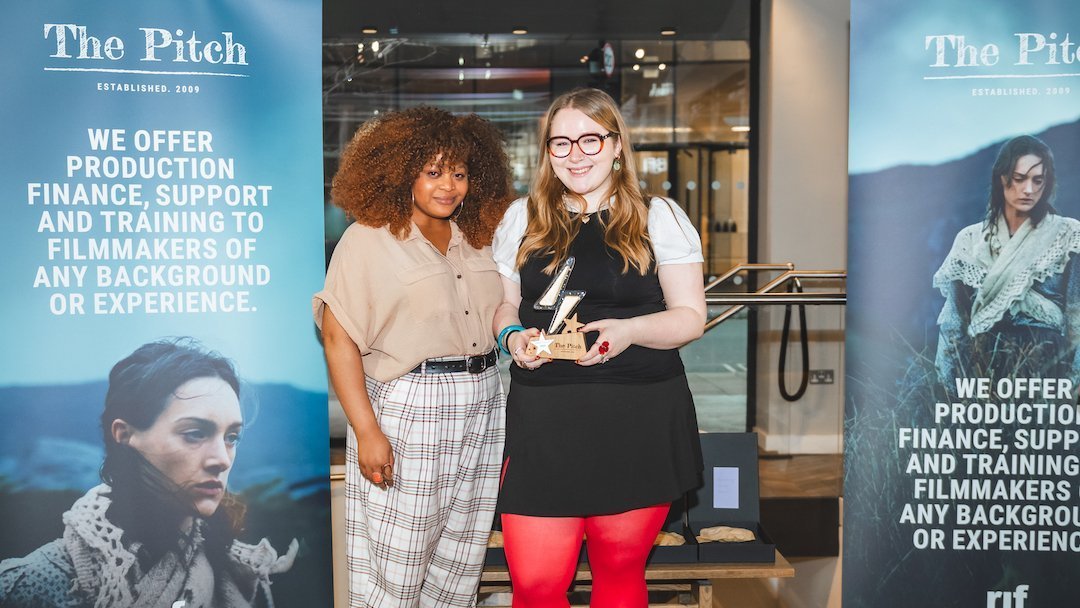
And then they said my name again. Lizzie Hart: Comedy Recipient 2025.
The only thoughts that came to mind in that moment were far too undignified to put in a blog.
I did it. I actually did it. I’m going to write a short film and someone is actually going to make it!
There’s a quote, which I think is about sport, but only known to me through the dulcet tones of Hilary Duff. It goes something like,
”Don’t let the fear of striking out stop you from playing the game”
The Pitch has already changed my life, and I haven’t even written the film yet. It was a huge challenge for me, but so worth it. The Pitch team, the judges and the other finalists, all saw something in me and my idea without a credit to my name. And that’s changed something in me. It reminded me why I want to do this – it reminded me that telling stories and making people laugh is what makes me come to life. I couldn’t recommend this experience enough. Filmmakers, playwrights, lonely graduates, storytellers of all shapes and sizes – apply!! At the very least it’ll stretch your storytelling skills. At the most it could give you a chance that no one else will – a chance to tell a brilliant story no matter what your experience is.
So yes, don’t let the fear of striking out, or failing, or not knowing the rules, or other players having better cards than you ever stop you from playing the game. It worked out pretty well for me.
We’ve all got stories to tell – don’t let something as silly as not knowing how to do something stop you from doing it.
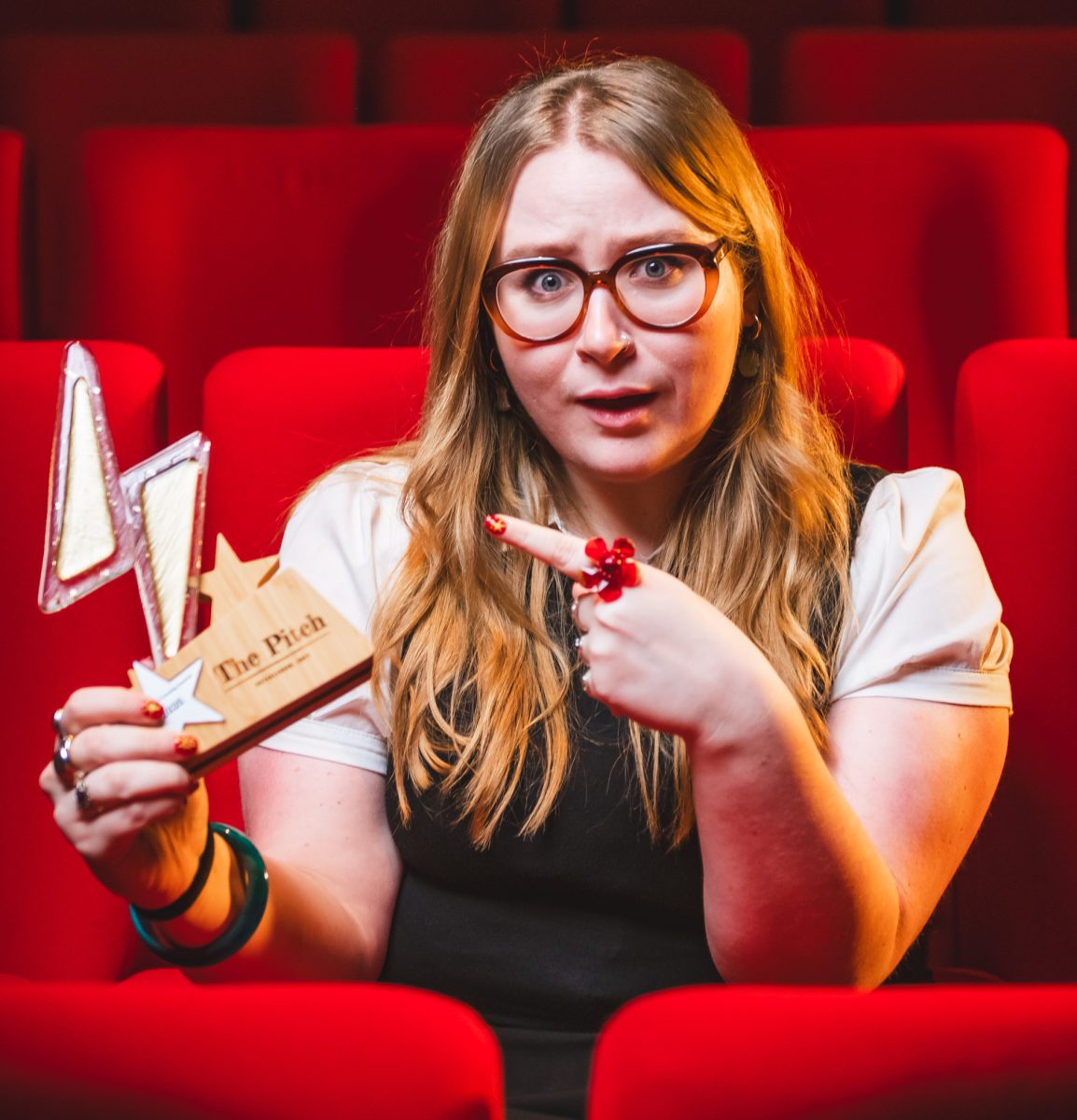
Lizzie Hart, a recent theatre studies graduate from Derby, received the Comedy Production Award at The Pitch Film Fund Awards 2025, for Kitty, a laugh-out-loud romcom about a charismatic neurodivergent shop assistant, grappling with her first crush, a treasure hunt and the perfect jumper. The judges commended her for her natural storytelling and her ability to shine a light on the personality of a neurodivergent* person, helping the audience hear their unique underrepresented voice with an adaptation of the parable The Pearl of Great Price. The Pitch is an annual adaptation challenge taking the world’s oldest book, The Bible, as the inspiration and providing the opportunity for comedy and drama films to be made with industry support.
*One in seven people in the UK are considered neurodivergent (more than 15% of the population).
