
Historical accuracy plays a major role in film costume, helping to improve immersion, educate visually, shape images of certain time periods, and complement the setting, according to The Art Reserve. Historical accuracy also brings to light fashion and techniques from a specific time while showcasing culture and history in a unique way. Due to the significance of historical accuracy, it’s important for those in the film industry to be aware of prominent examples in the Hollywood film industry, from producers to screenwriters, costume designers and beyond.
An accurate depiction of early 1900s fashion
James Cameron’s 1997 Titanic was an all-around critical and commercial success, with Gallup News pointing out that the film eventually became the first movie to earn more than $1 billion worldwide. The period drama was also awarded with an impressive 11 Academy Awards (including for Best Picture), while a 1998 Gallup poll found that the movie was preferred by 58% of respondents for the top award. While the clothing depicted in the movie could already fool the unsuspecting eye, one Glamour interview with fashion historian Raissa Bretaña reports that the costumes were quite true to the time. Telling the story of the ocean liner Titanic’s first — and last — voyage in 1912 (along with a fictional romantic plotline), Bretaña explains that the time period is “at the height of Gilded Age society,” while also serving as the beginning of modern fashion. Meticulous research and a skilled costume designer, Deborah Lynn Scott, brought to life the details in the most interesting way. For example, it’s noted that Rose’s costumes incorporated the latest styles from Paris (which reflects her first-class status on board).
Bretaña goes on to explain the meticulous attention to detail needed by the costume designer in order to pull off the level of costume accuracy in period movies. “To research this film, she looked at extant garments in museum collections, but also, fashion publications from that time period.” Rose’s iconic cream striped suit, for instance, is noted to appear “almost exactly” to a suit that actually appears in a 1912 French magazine. With that in mind, not every part of the film’s ensembles are 100% accurate in the movie — the makeup is noted to be more reminiscent of the 1990s, rather than the reality of the early 20th century.
Exploring Diana’s style in a unique way
The 2021 film Spencer explores the psychological aspects of Princess Diana’s life, particularly during Christmastime of 1991 when she was considering divorce from the then Prince Charles and eventually leaving the British royal family. As anyone could expect, the fashion depicted in the film reflects Diana’s unique style — though not exactly, as recreating different looks accurately wasn’t necessarily the goal of the film. “In terms of accuracy, we wanted to reinterpret and change it slightly, and we didn’t want any costume to say a particular time or place or moment, because all the Diana fans would know its historical place card,” explained two-time Oscar-winning designer Jacqueline Durran. Durran further explains that the overarching goal was to create a version of Diana, specifically “an idea of her based on her public visuals” that reflected her style rather than replicate her famous outfits exactly.
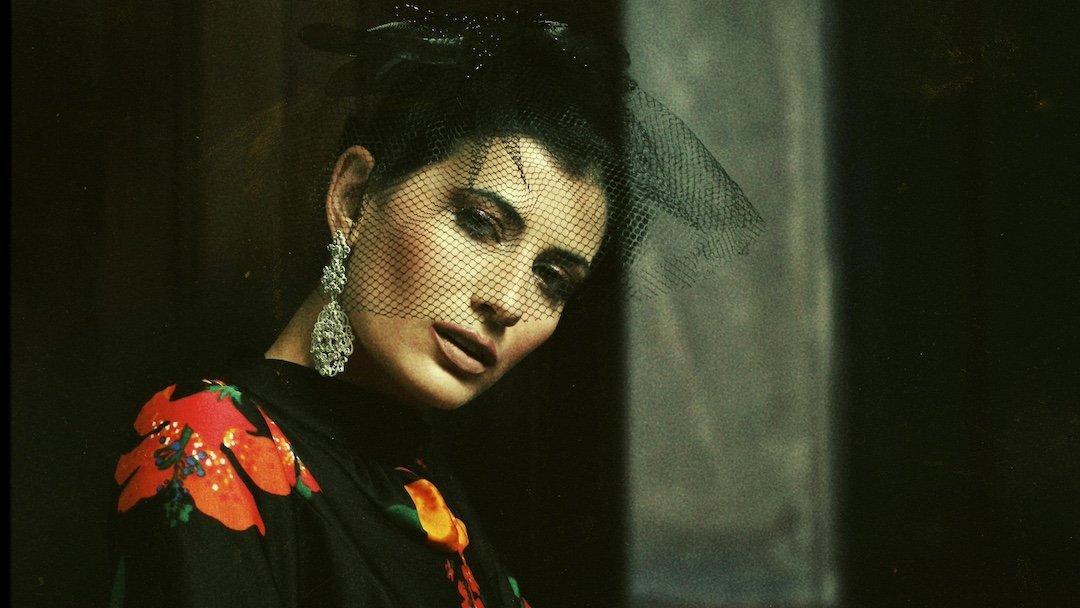
While Spencer doesn’t portray historically accurate details regarding Diana’s outfits, it’s imperative to note that her style was extensively researched by the designer. Durran describes the process, noting that she went through “hundreds and hundreds” of pictures of the Princess from the time period ‘88-92, effectively identifying themes and styles that were repeated throughout the years. Kristen Stewart portrays Diana in the film, and can be seen wearing striking fashion elements — such as a black veiled hat. From the uniquely shaped ribbon-esque fascinator worn by Princess Beatrice at the wedding of Prince William and Kate Middleton in 2011 to Kate’s fascinator at the Royal Ascot in 2017, fascinators have been a fashionable staple throughout history. For costume designers working on a project that depicts the British royal family’s history, fascinators are likely to make an appearance, both in a historical aspect as well as a statement piece.
1963 Cleopatra — true to life?
While Titanic serves as a great example of accurate historical fashion and how such details can benefit the film as a whole, it’s equally as important to be aware of how less accurate portrayals of fashion can impact a film. The Oscar-winning 1963 film titled Cleopatra, starring Elizabeth Taylor, is nothing short of extravagant, featuring costumes of lavish gold tones alongside signature striking eye makeup. Vibrant, colourful, and eye-catching, the costumes in Cleopatra are nothing short of amazing. However, in terms of historical accuracy, Egyptian Streets explains that they weren’t entirely accurate. “For the most part, the film’s depiction of how things would have actually been like in Ancient Egypt and Rome are most likely far from reality.” Egyptian Streets goes on to note that this is especially true when it comes to Cleopatra’s extravagant costumes, as those portrayed in the film actually happen to incorporate aesthetics that are more reminiscent of the 1960s rather than those of Cleopatra’s timeline.
A 2006 ABC Science article further explains Cleopatra’s hairstyles, citing art history and classics professor Diana Kleiner of Yale University, who dives into the subject in her book titled Cleopatra and Rome. According to Kleiner, historic items including statues, coins, and other depictions of the queen tend to showcase one of three different hairstyles. The first is described as a sectioning of the hair into curls, which were then pulled away from the face into a bun at the back of the head, an elaborate hairstyle “resembling a melon,” and a third — the famous royal Egyptian headdress depicting a cobra made of metal. In the 1963 film Cleopatra, Elizabeth Taylor can be found sporting elaborate headdresses, evoking the regal feel of the ruler while showcasing her power through her style.
Historical accuracy regarding fashion in period films may not seem like the most important aspect of a great film, though it can play a key role — even if the costumes aren’t extremely accurate. By analysing popular Hollywood films and how historical fashion has added to the film, those in the industry — from producers to designers — can appreciate the value of attention to detail.

Briana spent seven years working in independent film production before taking a step back to start a family. She has since returned to her first love of writing and enjoys contributing to a range of publications, both printed and online.
