

Ready to put your heart on your sleeve? From the earliest silent films (The Kiss, 1896) to Oscar-winning classics (Roman Holiday, 1953); or modern-day blockbusters (Mamma Mia: Here We Go Again, 2018) and indie darlings (Past Lives, 2023); romantic films come in all shapes and sizes.
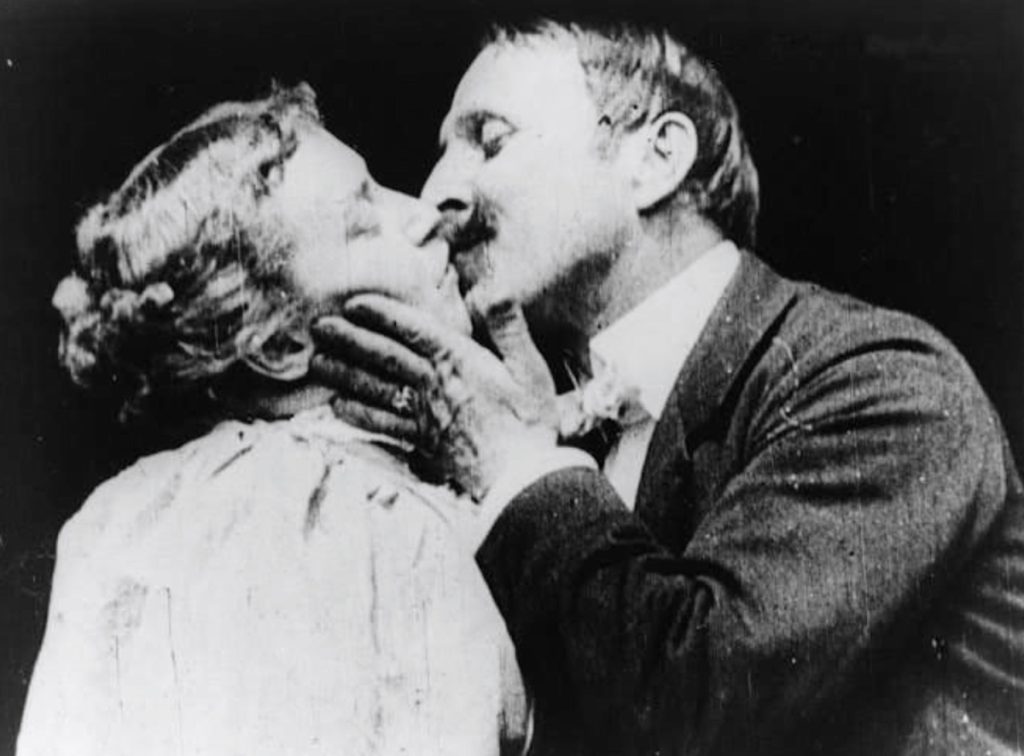

Whether big or small, cheesy or serious, most films that center on romantic relationships share certain traits that seem to resonate with general audiences.
In defense of the Romcom
In an era of mega-blockbusters and superheroes, the romantic comedy is a genre ripe with opportunity for down-to-earth characters, inclusive representation, and universal themes that audiences can relate to in a direct way. As Wesley Morris wrote for New York Times Magazine:
Romantic comedy is the only genre committed to letting relatively ordinary people — no capes, no spaceships, no infinite sequels — figure out how to deal meaningfully with another human being. … They take our primal hunger to connect with one another and give it a story. And at their best, they do much more: they make you believe in the power of communion. (Morris, 2019)
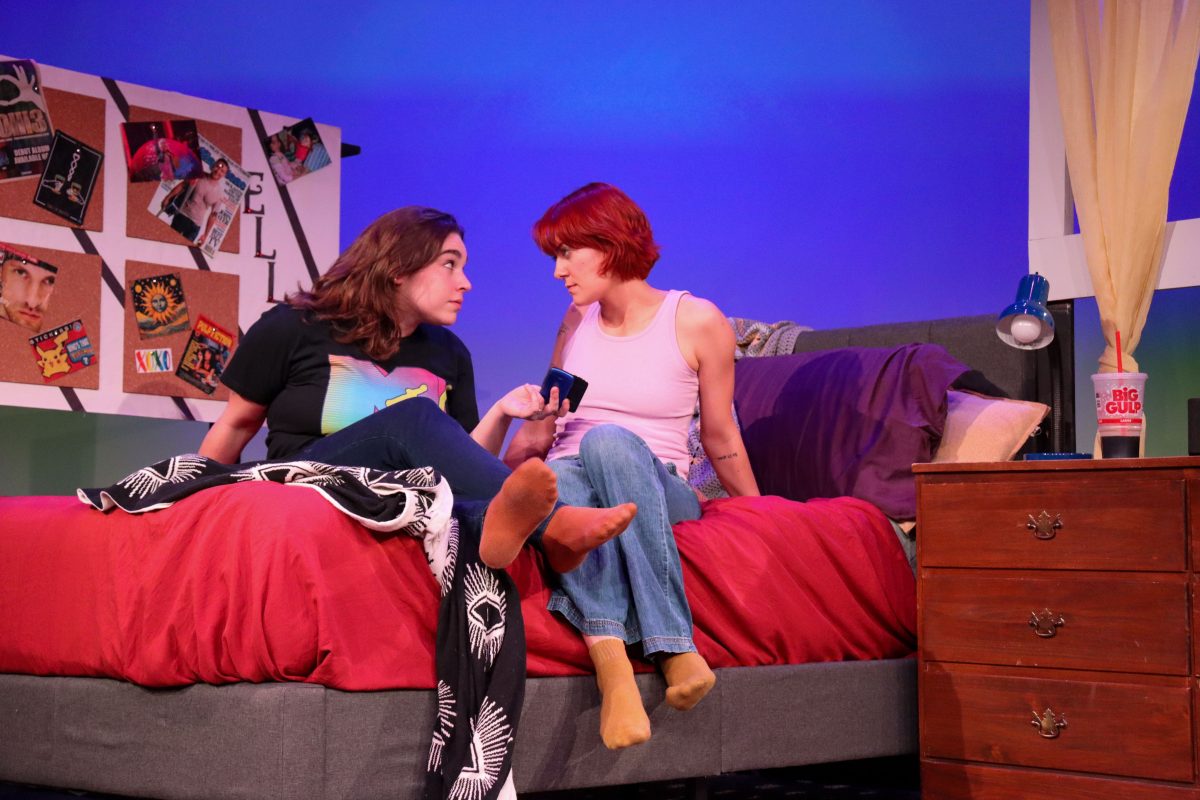
Izzy Chern (L) and Gracie Jacobson in Clink Clink: a love story (Two Cent Lion, 2024)
Photo credit: Taelor Hansen
If you’ve got an idea for a love story, here are four tips to turn that idea into a compelling screenplay.
(Note from the writer: for all-intensive purposes, this article will use the term “romcom” as a catchall for any film where the story engine is the “will-they-won’t-they” dynamic between two or more central characters.)
Lean into internal (AND external) conflict
In romcoms, the primary conflict is internal, not external. If what your protagonist wants is a relationship, what they need is to overcome the internal flaw (jealousy, lack of confidence, etc.) that is getting in their way.
However, that doesn’t mean external conflict has to be minimal or subtle. It is how protagonists respond to their internal conflict that generates external obstacles for their love interest. Which leads us to the next step…
Put your protagonists in each other’s way
When creating characters, a screenwriter must always ensure no one in the story exists in a vacuum. A helpful tool for this is the Character Web. Once you understand how your characters relate to each other, the next step is crafting a plot that puts characters in conflict with one another.
If writing a romcom with co-protagonists, this is especially relevant. To maintain story momentum, and to ensure both romantic leads are active on their transformative journey, you must find ways where your main characters directly impact one another. If A and B love each other, how can A’s external actions provoke B’s internal conflict? And vice versa?
- A POOR example of this is Your Place or Mine (2023), where Peter and Debbie separately have their own misadventures which eventually bring them together. They share the same NEED (overcoming their fear of risk-taking), but they have differing WANTS (Peter wants a family; Debbie wants an adventure). This fractures the focus of the narrative, and their resolution feels lacking as a result.
- A STRONG example of this is La La Land (2016), where Mia and Sebastian change their behavior as a direct result of the support and/or conflict they experience within their relationship. They achieve what they WANT (career success) by pushing each other to achieve their NEED (letting go of their stubborn/ineffective tactics).
Put yourself in the story… via THEME
You don’t have to pull a “Tennessee Williams” and literally create a character based on yourself. But if love and romance are a subject of interest to you, do some journaling to find your THEME.
- What do you understand about love? What does it mean to you?
- What don’t you understand about love? What have you struggled with in past relationships?
- Once you’ve reflected in this way, boil it down to one sentence – something snappy and insightful (i.e. something you can sell a producer!) – and once you’ve done that, you’ve got a thematic point-of-view. Some examples:
- Love can unlock our greatest potential (La La Land, 2016)
- Love is messy and imperfect (The One I Love, 2014)
- Love is a risk worth taking (Your Place or Mine, 2023)
Watch good AND bad Romcoms
If you only watch acclaimed films like When Harry Met Sally (1989), you won’t see why they’re successful. Alternate between critically successful and unsuccessful films that are similar in style, to better understand what works and what doesn’t.
Here are some fun pairings I would recommend:
-
- Love, Actually (2003) and Valentine’s Day (2010) for ensemble romcoms
- To All The Boys I’ve Loved Before (2018) and Swiped (2018) for modern teen romcoms
- Zach and Miri Make a Porno (2008) and Sex Tape (2014) for raunchy romcoms
- The One I Love (2014) and Passengers (2016) for sci-fi romance
- The Notebook (2004) and The Choice (2016) for cheesy romantic dramas (looking at you, Nicholas Sparks!)
- Clueless (1995) and He’s All That (2021) for modernizations of romantic classics

Alek Seballes (L) and Wes Mysinger in Yesterday/Today (Two Cent Lion, 2022)
Photo credit: Kalen Jesse Photography
Conclusion
Whether you strive to write the next Casablanca (1942), Crazy, Stupid, Love (2011), or Kissing Booth 2 (2020), these narrative tools will help you craft a compelling story. But at the end of the day, there is no “one-size-fits-all” in screenwriting.
As you set out to write your next love story, remember the most important part of a writer’s toolkit is their community. Bounce ideas off your friends, enemies, partners and priests — anyone who can relate to this crazy little thing called love. The beauty of a romantic film is how real and personal it can feel to the viewer. But that relatability won’t be conceived in a vacuum!
“Here’s looking at you, kid.” (Casablanca, 1942)

Kevin Douglas is an American playwright, filmmaker, producer, and teaching artist from Denver, Colorado. He is the co-founder and Executive Director of Two Cent Lion, an LGBTQ+ production house in Denver. He currently lives in London, where he is completing his Master’s in Screenwriting at Raindance Film School. His scripts aim to create positive queer representation by exploring the complexities (and the messiness) of human relationships.
