

Aaron Fjellman is an American writer and director. Recently, he directed his debut feature film ‘Caged’, a psychological thriller about the horrific, mind-bending effects of solitary confinement. Does it get better than having A-Listers like Edi Gathegi, Melora Hardin and Angela Sarafyan on your debut feature? How easy is it for an independent filmmaker in the industry today?
I hosted Aaron on my Tapping Creativity Podcast. Here are some key take-aways from that wonderful interview and conversation.
Matthew Temple: How was your experience making Caged?
Fjellman: It’s a personal test.
It took four years, from getting Caged basically out of my head onto the screen.
This wasn’t the first movie my business partner at Panic House Films and I intended to make. We wanted to make a $3 million feature, which was on the high end of a low budget. But since I didn’t have another credit in feature films, I was basically a risky proposition for any investor. So we went and spent two and a half years trying to raise the money with different combinations of actors and different combinations of tax credits and a different combination of potential investors.
This was until I watched a featurette on a pair of directors who did Starry Eyes and Pet Cemetery. They said that they’d gone down a road, hit a roadblock, and decided to pivot to a smaller film. This seemed like a good idea. Even though I knew that doing that would mean, I would make a lot less money, and there wasn’t going to be any creature comforts within the production. But then, I had to pay my dues.
Once I pivoted though, every piece fell into place. We started with a little bit of money from the last production. And then we raised money on the fly. Within six months, we were shooting on set.
Matthew Temple: Was it hard to maintain the vision while letting go of your original plan?
Fjellman: To be honest, I didn’t have a choice. The only way to be successful when you’re building your dream, on the backs of other people’s favors and goodwill, is to be fluid. You really need to take advantage of what you have. You need to be grateful for what you have at the moment, and take advantage of it to the best of your ability.
Luckily, one of the first things I did in the industry was working for an agent. I would help his clients make trailers for essentially things that they were trying to fund. So I would always start with, ‘What can we shoot? What do we own?’ ‘How can we start to paint a very broad brush and create these tentpole images that ultimately will sell the project?’
This way of thinking ensured we weren’t getting bogged down with perfection and too many details. And being able to not be so precious.
Matthew Temple: Exactly. When you get too precious, the idea ultimately becomes greater than the project itself. And that in and of itself, kills creativity.
So, while you have to make compromises, how do you keep your vision even as it evolves?
Fjellman: On the one hand, you need to be humble. You don’t have a monopoly on ideas. As a matter of fact, you should be worried if you’re not surrounded by people who are coming up with great ideas.
On the other hand, as much as other people will have great ideas, that doesn’t make you any less responsible for the vision. Sometimes, you have to say no, and it’s okay. But you need to do it respectfully. If someone makes a suggestion, and you don’t like it, and you say no, it shouldn’t require anything more than that if you’re the director. It goes a lot better if you can articulate yourself in a way that doesn’t waste a lot of time, but also doesn’t make someone feel stupid.
Matthew Temple: What’s the biggest challenge you faced as a writer-director?
Fjellman: When I’m writing, I read and perform every line in my mind silently as I write it on the page. Trying to refine the material. ‘Till I end up reading my script 10,000 times.
Now when we don’t have any time for rehearsal, the first performance done by an actor automatically sounds wrong. No matter how right it is. Because it’s no longer in the rhythm that I performed with when I wrote it.
This is one of the things I had to be very careful of. I kept reminding myself that their gut reaction isn’t necessarily wrong. As matter of fact, it could be very right. So I had to watch the takes again, to re-familiarize myself with the cadence choices that they’ve made before I can judge it fairly. Most of the time when I actually watched rushes later, I’d go, ‘Wow, that’s fantastic.’
But when you’re doing three takes, and you’re moving on, you have to decide that very quickly.
Matthew Temple: Yeah, presence is critical. Especially as a director, you’re constantly dealing with something that has the opportunities for failure at every moment. If you don’t come up with a sense of certainty, in order to move forward, you might just get blown away and miss the mark.
Fjellman: Yeah, if you’re to gain the trust of everybody around you, certainty is surely essential. And it’s really more of a perceptional thing.
But as soon as there’s a divergence between what you thought you needed and what you got, there’s going to be the potential for uncertainty. That’s still okay.
Matthew Temple: So, what are the key principles that you use to guide your creative process?
Fjellman: At the start of a project, I try to get to a place of nothingness in my mind. I come up with what I consider to be really good ideas when I’m on a bike ride, in the shower, watching movies, reading…
So I’d say the key to my creative process is creating an opportunity for me to become inspired. And running with the inspiration once it strikes.
Matthew Temple: Any last words for filmmakers out there?
Fjellman: Do you know the difference between a filmmaker and a creative?
Matthew Temple: Tell me.
Fjellman: A script. Everyone has an idea for a movie. Very few people have a script.
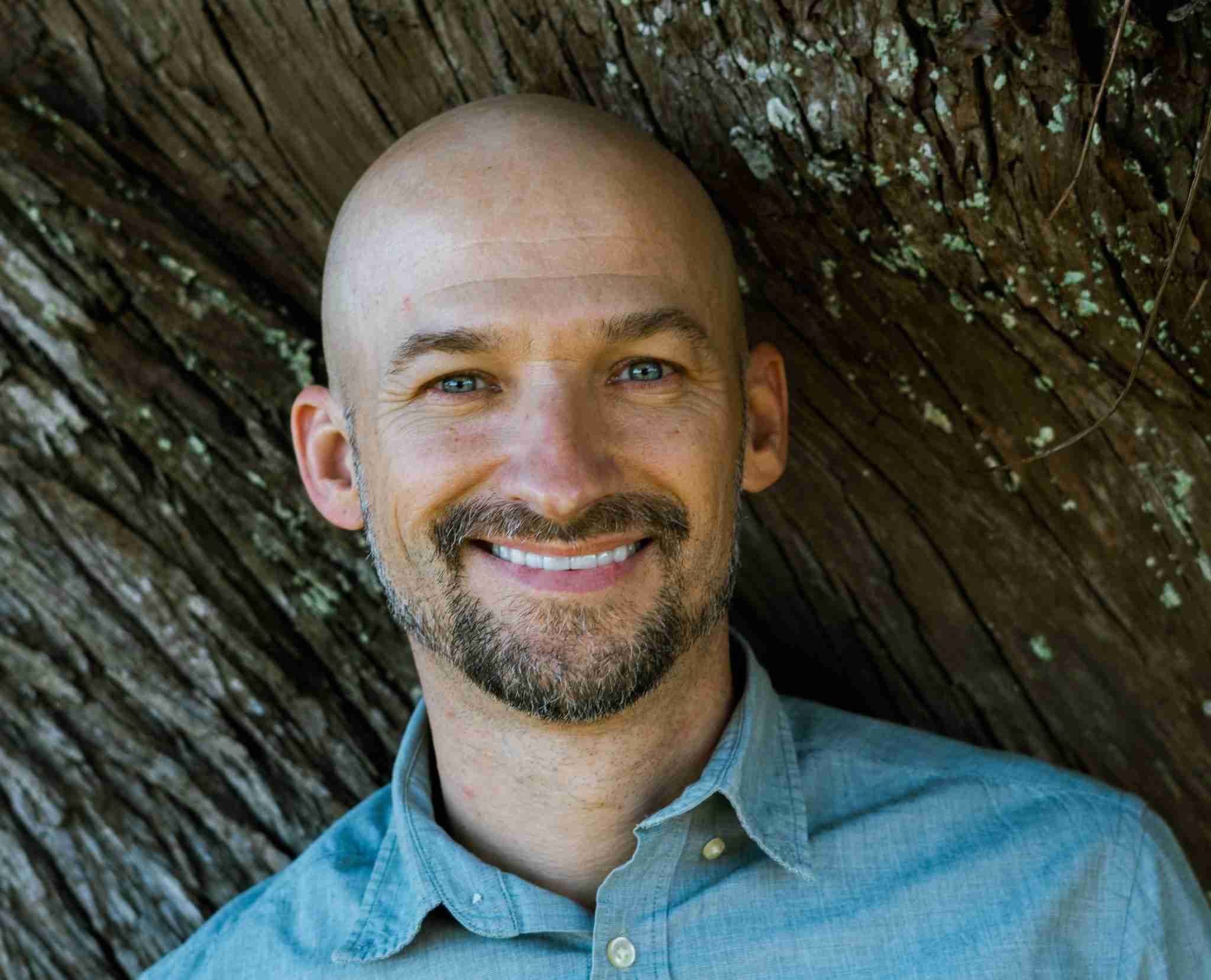
Matthew C. Temple is a writer, filmmaker and creative coach with two decades experience in the arts. You can find more of his work on his website.
